Organic Linen
Updated Aug 19, 2026 10 mins read
Edited by Urša Satler
Some retailers on this page pay us a commission when you buy through our links. It costs you nothing, and it never affects our rankings or filtering. Learn more
Search for "organic linen" and you'll find the phrase everywhere: product pages, brand manifestos, bedding ads. Look for the certificate behind it and things get thin, fast. So here's the honest version up front: linen is one of the lowest-input fibers you can buy even when it's grown conventionally, certified organic flax is genuinely rare, and the two labels shoppers most often mistake for organic certifications (European Flax and Masters of Linen) are not organic certifications at all.
This page covers the organic question specifically: how flax is grown and retted, why linen's baseline footprint is already low, what organic certification actually adds, and how to tell a verified claim from a vibe. If you want the basics of the fiber itself (why it wrinkles, why it gets better with age), start with the main linen explainer.
Key takeaways
- Linen is a natural fiber, but it is not organic by default. "Organic" is a farming claim, and it needs certification to mean anything.
- Flax is already a low-input crop (largely rain-fed in Western Europe, modest chemical use, mechanical processing), so the gap between conventional and organic linen is smaller than the same gap for cotton.
- Certified organic linen is rare, costs more, and is mostly European. Many "organic linen" claims online carry no certification at all.
- European Flax and Masters of Linen are origin and traceability marks, not organic certifications. Both allow synthetic fertilizers and herbicides.
- The strongest verification is GOTS: certified organic fiber plus audited processing chemistry and working conditions, with a license number you can actually check.
Is linen organic by default?
No. Linen is the cloth woven from the flax plant, and flax is a genuine natural fiber, but "natural" and "organic" are different claims. Natural describes what the fiber is. Organic describes how the crop was farmed, and it's a regulated term: under rules like the EU organic regulation and the USDA National Organic Program, an organic crop must be grown without synthetic pesticides or fertilizers, from untreated non-GM seed, on land that has been managed organically through a conversion period of roughly two to three years, with inspections to prove it.
Most of the world's fiber flax is conventionally grown, so most linen (including most very good linen) is not organic. But conventionally grown flax is nothing like conventionally grown cotton, and that changes what the word "organic" is worth on a linen label. To see why, you have to look at how flax is actually farmed.
How is flax grown, and why is linen's footprint already low?
Roughly 80% of the world's long-staple flax fiber grows in a coastal belt of Western Europe running from Normandy through Belgium into the Netherlands, where the damp maritime climate suits the plant. That geography does a lot of quiet environmental work:
- Rain does the watering. European fiber flax is grown on rainfall, essentially without irrigation. Compare cotton, where irrigation is one of the biggest environmental costs.
- Chemical inputs are modest. Flax has few serious pest problems, so it needs far less spraying than cotton. It isn't chemical-free (conventional growers use synthetic fertilizer and, above all, herbicides, because flax competes poorly against weeds), but per kilo of fiber, the inputs are low.
- It's a rotation crop. Flax is typically grown on a given field only once every six or seven years, rotated with other crops, which helps break pest cycles and rest the soil.
- Almost nothing is wasted. The plant is pulled up whole, and nearly all of it gets used: long fibers become linen, short fibers (tow) become coarser yarns and paper, the woody shives become animal bedding and chipboard, and the seeds become linseed oil and food.
- Processing is mechanical. Turning retted flax stalks into spinnable fiber is done by machines (scutching and hackling), not by dissolving anything in solvents. That puts linen in a different category from regenerated fibers like viscose, where the chemistry happens after the plant is harvested.
This is the key context for the organic question: flax already skips most of the sins that organic farming exists to fix. Organic linen is an upgrade to an already-clean crop, not a rescue of a dirty one.
What is retting, and does dew retting or water retting matter more than organic?
Retting is the step that makes linen possible. The long bast fibers in a flax stem are glued to the woody core by pectin, and retting uses microbes to dissolve that glue so the fibers can be separated. Two methods matter:
Dew retting (also called field retting) is the standard in France, Belgium, and the Netherlands. The pulled plants are laid out in the field for several weeks, and dew, rain, sun, and naturally occurring fungi and bacteria do the work. It uses no added water and no added chemicals, but it is completely at the weather's mercy. A season that's too wet or too dry changes fiber quality and yield, which is one reason linen prices swing from year to year.
Water retting means submerging the stalks in tanks or, historically, rivers. It's faster and gives more uniform fiber, but the fermentation releases oxygen-depleting organic waste into the water. River retting polluted waterways badly enough that it was abandoned (and in places banned) across much of Western Europe during the twentieth century, though tank retting is still used in some producing regions elsewhere.
Note what this means for the shopper: the cleanest retting method is already the conventional norm in Europe, and retting method is independent of organic status; organic flax in Europe is dew-retted the same way as its conventional neighbors. This is a case where standard practice was the low-impact option before any certification asked for it.
What does organic certification actually add?
At the farm, organic flax means no synthetic herbicides, pesticides, or fertilizers; untreated, non-GM seed (in fairness, there is no GM fiber flax in commercial use, so the practical difference is skipping the seed treatment); soil-building rotations; and a certified conversion period before anything can be sold as organic. The hard part is weeds. Conventional flax leans on herbicides precisely because the crop competes poorly, and replacing them with mechanical weeding makes organic flax riskier and lower-yielding to grow. That agronomic reality (not a lack of demand) is the main reason certified organic flax acreage stays small.
From the farm gate onward, the certification that matters is GOTS, the Global Organic Textile Standard. GOTS requires the fiber to be certified organic under a recognized farming standard, then audits every processing step to the finished garment. For linen, the farming half of that story is a smaller upgrade than it is for cotton, but the processing half still has teeth, because most of the chemistry in linen happens at bleaching, dyeing, and finishing. GOTS prohibits chlorine bleaching, formaldehyde-based finishes, aromatic solvents, and azo dyes that release carcinogenic amines; requires functional wastewater treatment at wet-processing sites; and applies labor criteria based on ILO conventions. A "GOTS organic" label needs at least 95% certified organic fiber; blends from 70% qualify for the separate made with organic materials grade. Every certified product carries the certifier's name and a license number you can look up.
Two other labels are worth placing precisely. The Organic Content Standard (OCS) verifies that the organic fiber content claimed is really in the product, tracked through the supply chain. It sets no rules on processing chemicals or working conditions. And OEKO-TEX Standard 100 tests the finished fabric for harmful residues; it says nothing about how the flax was farmed. A conventional linen shirt can be OEKO-TEX certified, and that's fine; just don't read it as organic.
Is European Flax certified linen organic?
No, and this is the single most common confusion in linen marketing, so it's worth being precise.
European Flax is a mark run by the Alliance for European Flax-Linen and Hemp (the industry body formerly known as CELC). It certifies origin and a farming charter: the flax was grown in Western Europe under commitments that include rain-fed cultivation, GMO-free seed, and zero-waste use of the plant. Masters of Linen goes further on geography: the fiber was grown, spun, and woven entirely in Europe. That's a meaningful traceability claim, because most European flax fiber is actually exported for spinning, chiefly to China, before coming back as fabric.
Both are honest, useful marks. Neither is an organic certification: synthetic fertilizers and herbicides remain permitted under both. When a product page says "European Flax certified" next to the word organic, you are looking at an origin claim doing an organic claim's job. The two can genuinely coexist; a garment can carry European Flax and GOTS at the same time, and that combination, European-grown fiber with a certified organic chain, is about the most verified linen there is.
Why are so many "organic linen" claims uncertified?
Because flax's clean reputation invites rounding up. Some brands call their linen organic because the crop is low-input, which is true but is not what the word means. Some describe a farm's practices with no third-party audit behind the description. Some genuinely buy certified organic fiber but lose the chain of custody at spinning or weaving, at which point the finished garment can no longer be verified. Enforcement of "organic" on textiles is thinner than on food, so the word survives on plenty of product pages that couldn't produce a certificate if you asked.
Asking is exactly the test. A real claim comes with a certifier's name and a license number; GOTS requires both on the label, and a brand that bought certified fabric can show the transaction certificate. If the answer is a paragraph about the brand's values instead of a number, treat "organic" as decoration. Our guide to reading material labels applies the same skepticism to every fiber, and it's the habit this whole site is built on: trust composition and certificates, not adjectives.
Is organic linen worth the extra cost?
Here's the frank version. Certified organic linen costs noticeably more, because organic flax yields less and more erratically without herbicides, the certified acreage is small, and certification adds cost at every step of a long supply chain. The selection is thin: expect a handful of brands, mostly working with European fiber.
What the premium buys is real but incremental: zero synthetic inputs on the field, soil-focused farming, and, with GOTS, restricted processing chemistry, treated wastewater, and audited working conditions. What it does not buy is a different fabric. Organic and conventional linen are the same fiber; hand-feel and durability depend on fiber grade, spinning, and weave, not on the farm's certificate.
So the comparison with cotton is instructive. For cotton, organic certification changes a heavy-input farming story substantially. That's why organic cotton is worth seeking out. For linen, conventional European flax is already rain-fed, low-spray, and dew-retted, so the organic upgrade is modest. If your budget forces a choice, a well-made conventional European linen piece beats an uncertified "organic" claim from an untraceable supply chain every time. If you can find and afford GOTS-certified linen, you're getting the most verified version of what was already one of the best fibers in the shop.
How do you care for organic linen?
Exactly like any linen: the certificate doesn't change the fiber. Machine wash cool, use a mild detergent, skip chlorine bleach, line dry, and iron from damp if you want it smooth. Linen sheds no plastic microfibers, tolerates frequent washing better than cotton, and softens with every wash instead of wearing out.
One honest footnote: GOTS prohibits the formaldehyde-based resin finishes sometimes used to make fabrics "easy-care," so certified linen wrinkles the way linen naturally does. That's not a defect; it's the fiber telling the truth. And whatever linen you buy, the biggest footprint lever isn't on the label at all; it's buying pieces you'll wear for years and washing them cool.
Live picks: prices and availability updated Sep 18, 2026
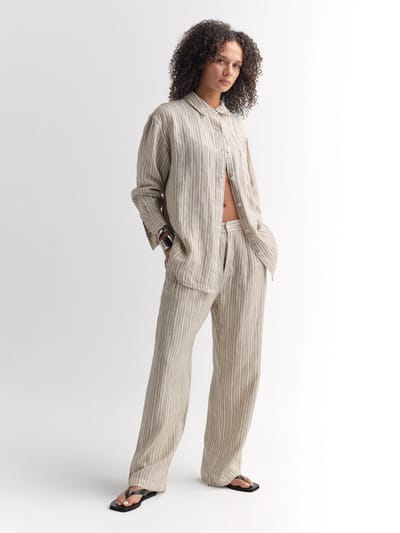

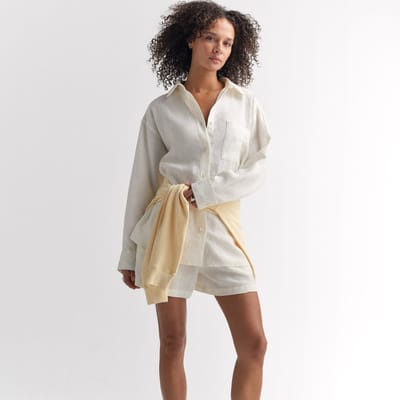
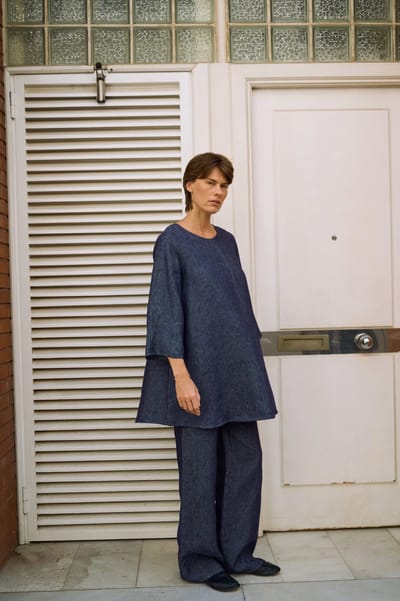
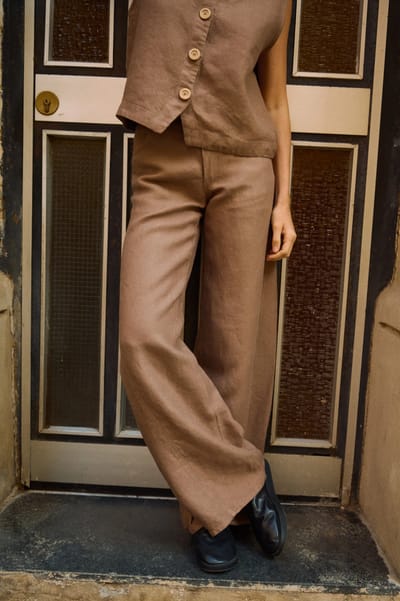
Certified organic linen is scarce, so if nothing shows above (or you simply want more choice), browse all linen or go straight to linen dresses; every product on MaterialFilter shows its verified fiber composition either way. New to natural fibers in general? Start with the natural fiber clothing guide.
Live picks: prices and availability updated Sep 23, 2026

Sources & further reading
Alliance for European Flax-Linen and Hemp (formerly CELC, covering the European Flax and Masters of Linen charters, flax cultivation and rotation practices), GOTS (Global Organic Textile Standard: labelling grades, prohibited inputs, and licensing), Textile Exchange (Organic Content Standard), the EU organic regulation and USDA National Organic Program (organic farming rules and conversion periods), OEKO-TEX (Standard 100), and published agronomy and textile research on flax cultivation, dew and water retting, and bast fiber processing.
Frequently asked questions
Is linen organic?
Not by default. Linen is a natural fiber made from flax, but "organic" is a regulated farming claim, and most of the world's flax is grown conventionally, with synthetic fertilizer and herbicides, though far less of them than cotton uses. Linen only counts as organic when the flax was grown under a certified organic standard, and ideally when a certification like GOTS tracks that fiber all the way to the finished garment. Without a certificate, "organic linen" is a description the seller chose, not a verified fact.
What is the difference between organic linen and regular linen?
The farming, not the fabric. Organic flax is grown without synthetic pesticides, herbicides, or fertilizers, from untreated seed, on land certified through a multi-year conversion, and with GOTS, the processing chemistry and labor conditions are audited too. The fiber that comes out is the same flax, so hand-feel and durability depend on fiber grade and weave rather than on the certificate. Because conventional flax is already rain-fed and low-input, the conventional-to-organic gap for linen is real but much smaller than the same gap for cotton.
Is European Flax certified linen organic?
No. European Flax certifies origin (flax grown in Western Europe under a charter that includes rain-fed cultivation, GMO-free seed, and zero-waste use of the plant), and Masters of Linen additionally guarantees the fiber was spun and woven in Europe. Both marks permit synthetic fertilizers and herbicides, so neither is an organic certification. They can coexist with GOTS on the same garment, and that combination is about the strongest set of claims linen can carry.
How can I tell if "organic linen" is genuinely certified?
Look for the certification name plus a license number; GOTS requires both the certifier and a license number on labeled products, and OCS-certified goods are similarly traceable. You can verify GOTS license numbers in the standard's public database, and a brand that really bought certified fabric can produce a transaction certificate on request. If a product page says "organic" but names no standard and shows no number, treat it as marketing copy.
Is organic linen worth the higher price?
If you can find GOTS-certified linen and the price works for you, it's the most verified version of an already low-impact fiber: organic farming plus restricted dye and finishing chemistry plus audited working conditions. But conventional European linen is itself one of the cleaner fabrics you can buy (rain-fed, low-spray, dew-retted, mechanically processed), so you're paying for an incremental upgrade, not a transformation. A well-made conventional linen piece from a traceable source beats an uncertified "organic" claim every time.
About the editor
Urša Satler is the founder of Purefect Choice, an online non-toxic goods shop in Slovenia. She stocks what she and her family actually need and use themselves, chosen on material composition and certification.
She started MaterialFilter for a plainly selfish reason: she was tired of checking labels in shops one garment at a time, and tired of hunting for fibre content buried five clicks deep on a product page, usually to discover that a beautiful dress was mostly polyester. MaterialFilter does that checking once, up front, so the composition is the first thing you see instead of the last thing you find.
She sets the standard this site scores against and owns its editorial direction. What she brings to it is the habit of reading a composition label before anything else (daily, for her own family and the shop she runs) and one rule that keeps that habit honest: every claim on MaterialFilter is meant to be checkable against a certification body's own public register, so you never have to take her word for it.