Elastane (Spandex, Lycra)
Updated Aug 19, 2026 10 mins read
Edited by Urša Satler
Some retailers on this page pay us a commission when you buy through our links. It costs you nothing, and it never affects our rankings or filtering. Learn more
Pull the care label out of almost anything stretchy in your wardrobe (jeans, T-shirts, leggings, even that "linen" dress) and you'll usually find the same word near the bottom: elastane. Or spandex. Or Lycra. Three names, one fiber. And whatever the front of the garment claims to be made of, this ingredient is not natural: it's polyurethane, a plastic engineered to stretch.
Elastane earned its place in modern clothing. Nothing natural stretches like it. But it comes with trade-offs nobody prints on the swing tag: it's usually the first fiber in a garment to die, and even a few percent of it can make the whole garment effectively non-recyclable. Let's go through it plainly.
Key takeaways
- Elastane, spandex, and Lycra are the same fiber: a fully synthetic polyurethane. "Elastane" is the name used in Europe and most of the world, "spandex" is the American name, and Lycra is a brand.
- It's blended in small doses (roughly 1–3% in stretch denim, 5–10% in T-shirts, 15–25% in leggings and swimwear), and it hides in a huge share of clothing, including garments marketed as "linen" or "cotton."
- Elastane is usually the first fiber in a garment to fail. Heat, chlorine, body oils, and plain time break polyurethane down; that's why waistbands and knees "bag out."
- Even 2% elastane is enough to make a garment a problem for textile-to-textile recycling, and the fiber itself doesn't biodegrade.
- Stretch without elastane is real: knit constructions, wool's natural crimp, and bias-cut wovens all move with the body.
What is elastane?
Elastane is a man-made stretch fiber invented in 1958 by DuPont chemist Joseph Shivers and sold under the Lycra brand name from the early 1960s. Chemically it's a segmented polyurethane: long molecular chains with soft, coiled segments that let the fiber stretch several times its own length (five to eight times is the commonly quoted figure) and snap back to shape.
Both major regulators define it the same way. The U.S. Federal Trade Commission's generic fiber name is "spandex": a manufactured fiber that is at least 85% segmented polyurethane. The EU's textile-labelling regulation uses the name "elastane" with the same 85% polyurethane threshold. In other words, wherever you shop, the word on the label is legally pinned to the same plastic.
You will almost never see a garment made of elastane alone. It's a supporting ingredient: a few percent twisted or knitted in alongside cotton, polyester, wool, or linen to add stretch and recovery. By weight it's a sliver of the world's fiber supply (around 1% in Textile Exchange's market data), but because a little goes a long way, it shows up in an outsized share of finished garments.
Is elastane natural?
No, and there's no soft version of this answer. Textile fibers fall into three broad buckets:
- Natural fibers, grown by a plant or animal and mechanically cleaned and spun: cotton, linen, hemp, wool, silk.
- Regenerated fibers, which start as plant cellulose but are chemically dissolved and rebuilt: viscose, modal, lyocell/TENCEL.
- Pure synthetics, made from petroleum: polyester, nylon, and elastane.
Elastane sits firmly in the third bucket. There is no plant, no animal, and no cellulose in it; it's plastic from end to end. A few makers now sell partly bio-based elastane, where renewable feedstocks replace some of the petroleum inputs. That's a genuine improvement at the front of the pipe, but the finished fiber is still polyurethane: it behaves the same, fails the same, and persists in the environment the same. "Bio-based" on a stretch fiber is not "natural," and it's worth reading past the marketing.
Elastane, spandex, Lycra: what's the difference?
Nothing, chemically. The differences are geography and branding:
| Name on the label | What it is | Where you'll see it |
|---|---|---|
| Elastane (abbreviated EL) | The generic fiber name | EU, UK, and most of the world |
| Spandex | The same generic fiber (the word is an anagram of "expands") | United States and Canada |
| Lycra | A brand of elastane, originally DuPont's, now made by The Lycra Company | Marketing copy and hang tags worldwide |
| Elasthan / élasthanne | The same fiber in German and French labelling | EU garments |
Other brand names exist too: Creora (Hyosung) and Roica (Asahi Kasei) are two big ones. Whatever the trade name, the composition line will say elastane or spandex, and the percentage next to it is the number that matters.
Why do brands add elastane to everything?
Because a small dose solves several problems at once, mostly the brand's problems.
Stretch makes one cut fit more bodies, which means fewer sizes to produce and fewer returns to process. It lets tighter silhouettes stay wearable and lets thinner, cheaper fabrics hold their shape longer on the sales floor. It adds "comfort stretch" to woven fabrics like denim and suiting that would otherwise have almost no give. And recovery (the snap-back) keeps knees and elbows from staying stretched out, at least while the elastane is young.
Some of this is honest engineering: swimwear, sports bras, and compression gear genuinely need elastic performance, and no natural fiber can deliver it at that level. But in a woven linen dress or a cotton shirt, a few percent of elastane is often less about your comfort and more about fit forgiveness: a shortcut that papers over pattern-making with plastic. Well-cut woven garments managed without it for most of clothing history.
How is elastane made?
Elastane is built from petroleum-derived chemicals, typically a diisocyanate (MDI) reacted with a polyether glycol, to form the segmented polyurethane polymer. Around 90% of the world's supply is then produced by dry spinning: the polymer is dissolved in a solvent, usually dimethylacetamide (DMAc), and extruded into warm air where the solvent evaporates and fine elastic filaments remain.
That solvent is the uncomfortable part of the story. DMAc is classified in the EU as toxic to reproduction and sits on the REACH candidate list of substances of very high concern: a workplace-exposure issue in fiber plants, most of which are in Asia. How much solvent is recovered versus released depends on the factory. For the wearer, residues in the finished garment are the relevant question, and finished-product tests like OEKO-TEX Standard 100 set limit values for residual solvents including DMAc. So a certified garment addresses the "safe to wear" question; it says nothing about what the fiber is or how it was made.
The trade-off: elastane fails first
Here's the part that matters for how long your clothes last: polyurethane is a fragile plastic. It degrades from heat; a hot tumble dryer is the fastest way to kill it. It degrades from chlorine, which is why pool water wrecks swimwear and why chlorine bleach is banned on every elastane care label. It degrades from UV light, body oils, and some sunscreens. And it degrades from plain age, as oxidation slowly stiffens the polymer.
When elastane dies, you know it. Waistbands go slack, leggings bag out at the knees, swimsuits turn saggy and see-through. Those short white squiggly threads poking out of an old waistband? That's broken elastane filament: the stretch skeleton snapping strand by strand.
The result is a quiet lifespan problem: a garment lives only as long as its weakest fiber. Linen famously improves for five to ten years of regular wear; a linen-elastane blend is done when the 5% gives out, no matter how good the other 95% still is. If you buy natural fibers partly because they last, elastane is the ingredient most likely to cut that promise short.
Why 2% elastane can make a garment non-recyclable
Textile recycling is already in bad shape: the Ellen MacArthur Foundation's landmark 2017 report estimated that less than 1% of the material used to make clothing is recycled into new clothing. Fiber blends are one of the main reasons, and elastane is the worst offender for its size.
Mechanical recycling shreds fabric back into fiber, and stretchy polyurethane strands gum up that process and contaminate the output. Chemical recycling (dissolving cotton or polyester back to raw feedstock) needs clean inputs, and even small amounts of elastane can spoil a batch. In practice, textile-to-textile recyclers either cap elastane content at a few percent or reject blended garments outright. Processes that strip elastane out of blends exist in labs and pilot plants, but nothing operates at meaningful scale today.
So the arithmetic is blunt: a 98% cotton, 2% elastane T-shirt is, for now, a garment that will most likely be downcycled into insulation or rags, or landfilled, rather than becoming fabric again. And unlike the cotton around it, the elastane fraction doesn't biodegrade; it sheds and persists like any other plastic.
How to care for elastane blends
If your wardrobe already contains elastane (and it almost certainly does), care is mostly about protecting the polyurethane from its enemies:
- Wash cool (30°C / cold setting). Heat is enemy number one.
- Skip the tumble dryer, or use the lowest heat if you must. Line drying is the single biggest life-extender for stretch garments.
- Never use chlorine bleach. It attacks polyurethane directly.
- Rinse swimwear in fresh water as soon as you're out of the pool; chlorinated water keeps degrading the fiber while the suit sits in your bag.
- Iron low and indirectly if at all: a hot iron on a stretch panel can kill the elastic on contact.
None of this stops the clock; it just slows it. Elastane degrades with age even in a drawer.
How to get stretch without elastane
The good news: "stretch" and "elastane" are not the same thing. Fabric can move with you in three natural ways.
Knits stretch mechanically. A knit fabric is made of interlocking loops, and the loops flex, which is why a 100% cotton rib T-shirt or a heavy jersey stretches and recovers with no synthetic content at all. If you want stretch in organic cotton, buy it as a knit.
Wool stretches naturally. Wool is the most elastic of the major natural fibers: its crimped structure gives knitwear genuine stretch and recovery. A well-made wool sweater or pair of knit trousers holds its shape for years without a strand of polyurethane.
Wovens can be cut to move. Fabric cut on the bias (at 45 degrees to the grain) drapes and gives even though the weave itself doesn't stretch; dressmakers have used this since the 1920s. And a relaxed or properly tailored cut in woven linen or cotton simply doesn't need stretch: the ease is built into the pattern, not the fiber.
The honest trade-off: garments without elastane are less forgiving of the wrong size. They fit because they're cut and sized well, not because plastic pulls them onto you. Buy your actual size, and check the measurements.
Reading the label: how to spot (and avoid) elastane
The product name will not tell you. A "linen dress" can legally be 95% linen and 5% elastane: the name describes the marketing, the composition line describes the garment. So the habit that matters is simple: read the fiber composition, every time, and treat words like "stretch," "flex," "comfort," and "ease" on woven garments as a strong hint that elastane is in the mix. On the label itself, watch for elastane, spandex, Lycra, Elasthan, élasthanne, or the abbreviation EL. Our guide to reading material labels covers the full vocabulary.
Two certification caveats worth knowing. GOTS (the strictest mainstream organic standard) still permits a small share of elastane in the non-organic remainder of a certified garment, so "GOTS organic" does not automatically mean elastane-free. And OEKO-TEX tests for harmful substances in the finished product, not for what the fibers are: an elastane blend can carry the label. Neither cert is a substitute for reading the composition.
This is, frankly, why MaterialFilter exists: every product we list shows its verified fiber composition up front, so "100% linen" means 100% linen and a hidden 5% of stretch plastic has nowhere to hide. If you've ever typed "linen dress without elastane" into a search engine, you're the person we built this for: our elastane-free clothing page lists only pieces whose declared composition contains no elastane at all.
So should you avoid elastane?
Where elastic performance is the whole point (swimwear, sports bras, compression gear), elastane is doing a real job and there's no natural fiber that can replace it. Buy it knowingly, care for it gently, and expect a limited lifespan.
Everywhere else, it's worth asking what the elastane is for. In everyday dresses, shirts, trousers, and knits, 100% natural fiber lasts longer, ages better, recycles more realistically, and biodegrades at end of life. The stretch you actually need is usually available from the knit, the wool, or the cut.
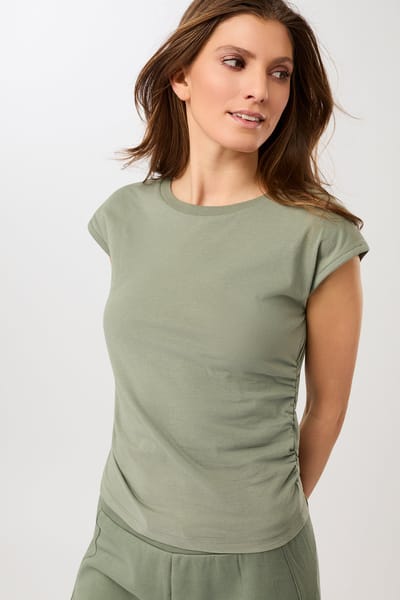
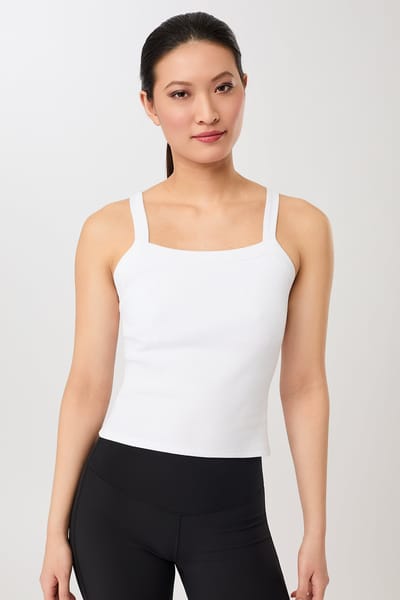
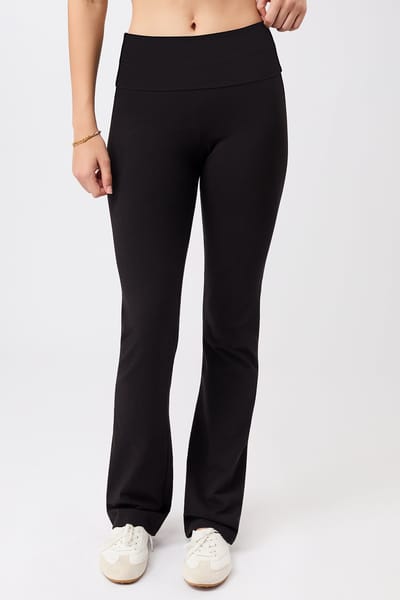
Live picks: prices and availability updated Sep 23, 2026
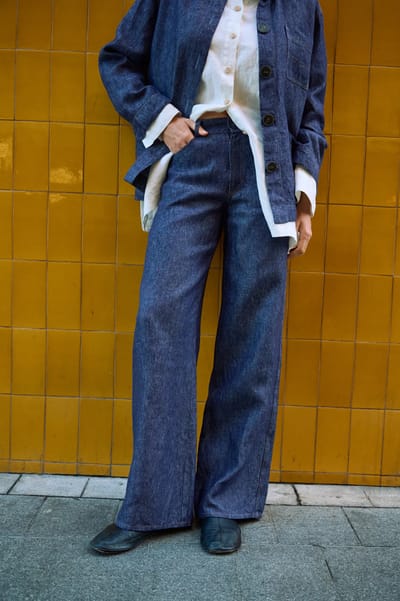
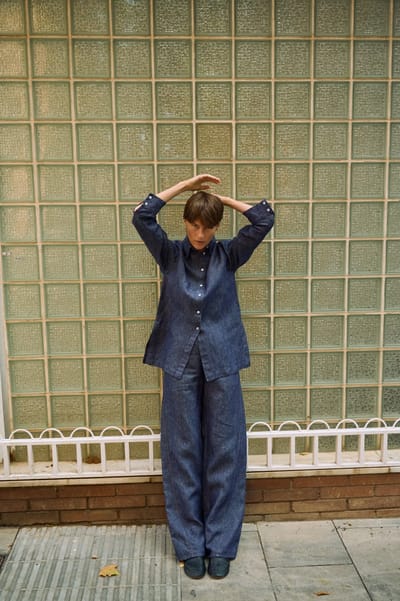
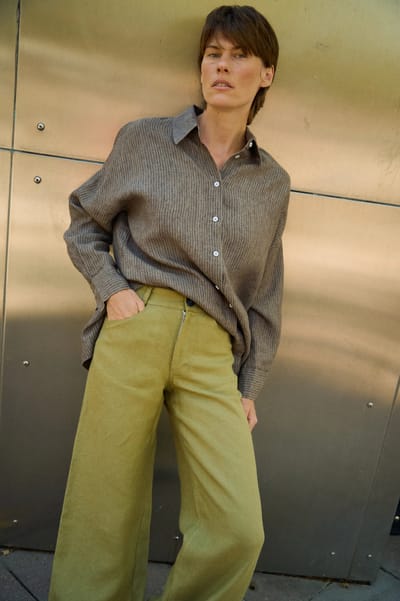

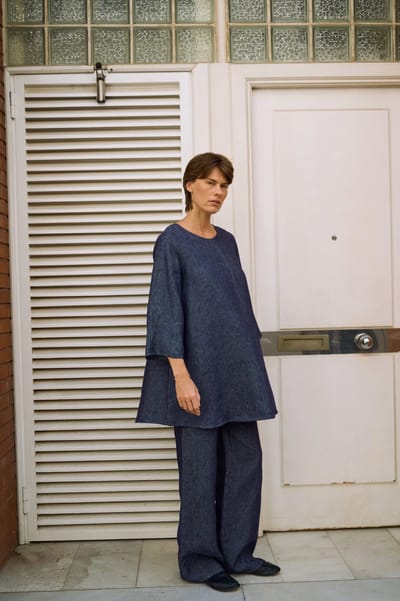
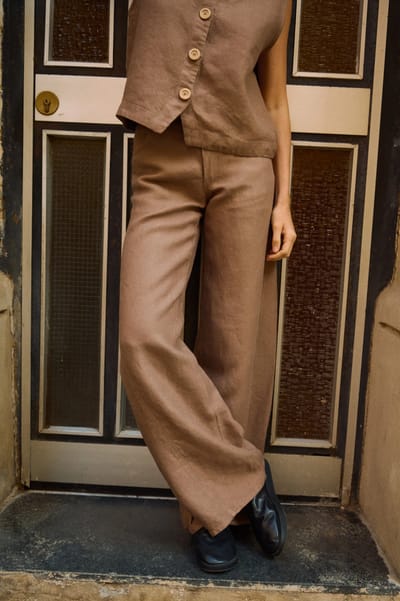
Want pieces with nothing hidden in the composition line? Browse our linen collection and linen dresses (woven, breathable, zero stretch plastic), or start with the full natural fiber clothing guide.
Live picks: prices and availability updated Sep 25, 2026
Sources & further reading
U.S. Federal Trade Commission (Textile Fiber Products Identification Act and the generic fiber name rules defining spandex), EU Textile Fibre Names Regulation 1007/2011 (elastane definition and labelling), the European Chemicals Agency (REACH candidate-list entry for the solvent DMAc), OEKO-TEX (Standard 100 limit values for residual solvents), Textile Exchange (Materials Market Report fiber-share data), the Ellen MacArthur Foundation ("A New Textiles Economy," 2017, on blends and the sub-1% fiber-to-fiber recycling rate), DuPont and The Lycra Company historical records on the invention of spandex, and textile-chemistry literature on segmented polyurethane fibers.
Frequently asked questions
Is elastane natural?
No. Elastane is a fully synthetic fiber made of segmented polyurethane: a petroleum-derived plastic. Both the U.S. FTC (which calls it "spandex") and EU textile-labelling law (which calls it "elastane") define it as a manufactured fiber that is at least 85% polyurethane. Partly bio-based versions exist, but the finished fiber is still polyurethane and still doesn't biodegrade. There is no natural elastane.
Are elastane, spandex, and Lycra the same thing?
Yes, one fiber, three names. "Elastane" is the generic name in Europe and most of the world, "spandex" is the American generic name (an anagram of "expands"), and Lycra is a brand of elastane originally developed by DuPont and now made by The Lycra Company. German and French labels write it as Elasthan or élasthanne, and some labels abbreviate it EL. The percentage on the composition line means the same thing regardless of which name appears.
Is 2% elastane a big deal?
For how the garment feels today, barely: 2% adds gentle stretch you might not even notice. For how the garment ends, yes. Even a few percent of elastane is enough to disqualify a garment from most textile-to-textile recycling, because the polyurethane contaminates both mechanical and chemical recycling processes. And since elastane usually degrades before the fibers around it, a 98% cotton garment can still die when its 2% stretch skeleton gives out.
Why do leggings and jeans bag out at the knees?
Because the elastane in them has lost its recovery. Polyurethane breaks down with heat, chlorine, body oils, UV light, and plain age; once enough filaments have snapped or stiffened, the fabric stretches but no longer snaps back, so knees, seats, and waistbands stay stretched. Hot tumble drying is the biggest accelerator. Washing cool, line drying, and avoiding chlorine bleach slow the process, but all elastane loses its snap eventually.
How do I find a linen dress without elastane?
Read the fiber composition, not the product name: a "linen dress" can be 95% linen and 5% elastane, and only the composition line will say so. Look for "100% linen" explicitly, and be alert to the words "stretch" or "flex" in descriptions of woven garments. Woven linen doesn't need elastane to fit well; it needs a good cut and the right size. Every product on MaterialFilter shows its verified composition, so you can check before you click through.
About the editor
Urša Satler is the founder of Purefect Choice, an online non-toxic goods shop in Slovenia. She stocks what she and her family actually need and use themselves, chosen on material composition and certification.
She started MaterialFilter for a plainly selfish reason: she was tired of checking labels in shops one garment at a time, and tired of hunting for fibre content buried five clicks deep on a product page, usually to discover that a beautiful dress was mostly polyester. MaterialFilter does that checking once, up front, so the composition is the first thing you see instead of the last thing you find.
She sets the standard this site scores against and owns its editorial direction. What she brings to it is the habit of reading a composition label before anything else (daily, for her own family and the shop she runs) and one rule that keeps that habit honest: every claim on MaterialFilter is meant to be checkable against a certification body's own public register, so you never have to take her word for it.