Linen
Updated Aug 19, 2026 2 mins read
Edited by Urša Satler
Some retailers on this page pay us a commission when you buy through our links. It costs you nothing, and it never affects our rankings or filtering. Learn more
Linen is cloth woven from flax (a tall, slender plant grown mostly in northern France, Belgium, and the Netherlands). Flax has been spun into linen for at least 8,000 years, longer than any other natural fiber.
Where it comes from
Western European flax accounts for roughly 80% of the world's long-staple fiber. The plant is rain-fed, harvested whole, and "retted" (allowed to break down naturally in the field for several weeks) before the long fibers can be combed out and spun. The process is slow and largely mechanical, which is one reason linen is more expensive than cotton.
How it wears
Linen feels cool against the skin because the fibers are hollow and the cloth sits slightly off the body, allowing air to circulate. It wrinkles readily; that is the fiber, not a defect. Most linen brands lean into the relaxed look. Linen also softens with each wash and gets noticeably nicer over five to ten years of regular wear.
How to care for it
Cool machine wash, line dry, iron from damp if you want a smoother finish. Linen tolerates more washing than cotton before it shows wear because the long fibers do not pill the way short cotton fibers can.
Linen is also the natural home for anyone avoiding synthetic linings: see our polyester-free dresses, which list only dresses whose declared composition contains no polyester.
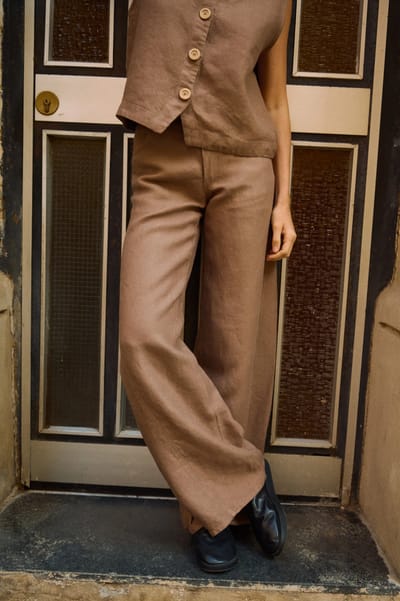
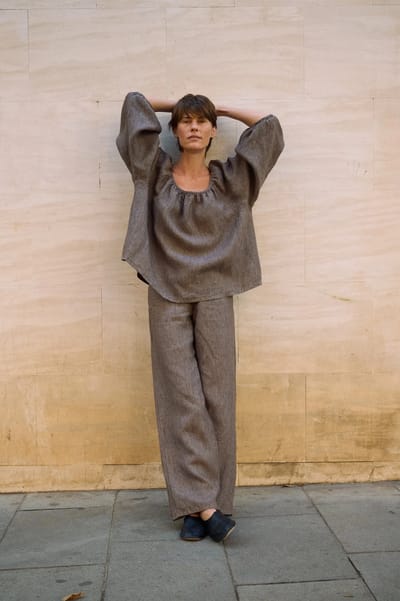
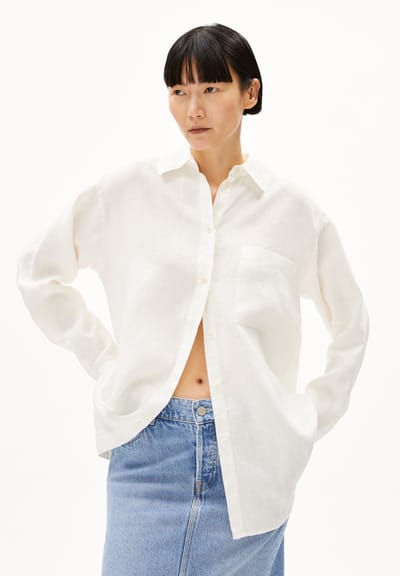
Live picks: prices and availability updated Sep 27, 2026

About the editor
Urša Satler is the founder of Purefect Choice, an online non-toxic goods shop in Slovenia. She stocks what she and her family actually need and use themselves, chosen on material composition and certification.
She started MaterialFilter for a plainly selfish reason: she was tired of checking labels in shops one garment at a time, and tired of hunting for fibre content buried five clicks deep on a product page, usually to discover that a beautiful dress was mostly polyester. MaterialFilter does that checking once, up front, so the composition is the first thing you see instead of the last thing you find.
She sets the standard this site scores against and owns its editorial direction. What she brings to it is the habit of reading a composition label before anything else (daily, for her own family and the shop she runs) and one rule that keeps that habit honest: every claim on MaterialFilter is meant to be checkable against a certification body's own public register, so you never have to take her word for it.