Linen vs Cotton: Best for Summer?
Updated Aug 19, 2026 9 mins read
Edited by Urša Satler
Some retailers on this page pay us a commission when you buy through our links. It costs you nothing, and it never affects our rankings or filtering. Learn more
If you only remember one thing: for hot, sticky summer days, linen usually keeps you cooler than cotton. It lets more air through and pulls sweat off your skin faster, so it feels dry and breezy instead of clammy. Cotton is softer right out of the bag, costs less, and is perfectly comfortable on mild days or indoors. But when the heat and humidity climb, linen has the edge.
Both are natural plant fabrics, so this isn't a "good vs bad" fight. It's about which one fits your day. The whole comparison really comes down to one thing: how each fabric moves heat and moisture away from your body. Once you understand that, everything else (how long they last, how they wrinkle, how green they are) falls into place.
Key takeaways
- Linen feels cooler in real heat. It breathes more and dries faster, so it doesn't cling when you sweat.
- Cotton feels softer and costs less. It's the comfy, familiar choice for mild days and close-to-skin basics.
- Linen lasts longer, often decades, and gets softer every wash. Cotton usually wears out sooner.
- Linen wrinkles more. If creases bother you, that's the trade-off, or pick a linen-cotton blend.
- Linen is gentler on the planet. Flax (the plant linen comes from) needs far less water and spray than conventional cotton.
- For sensitive skin, the fabric is rarely the problem; dyes and finishes usually are. Look for a trusted certification label.
Which fabric keeps you cooler in summer?
This is the heart of it. On a hot day your body cools itself by sweating, and the sweat carries heat away as it evaporates. So the best summer fabric is one that soaks up sweat and lets it escape into the air. Linen does both better than cotton.
Three textile scientists interviewed by The Washington Post all agreed: linen keeps you cooler. The simplest reason is the shape of the fibers. Under a microscope, cotton fibers look like twisted ribbons full of kinks, which trap water. Linen fibers look like straight, stiff little rods, with fewer places for water to get stuck. As Cornell fiber scientist Larissa Marie Shepherd put it, "Flax is straight, so there's not as many places for the water to be trapped inside."
That matters because of what happens when you sweat. Cotton soaks up a lot of moisture but holds onto it. Georgia Tech professor Sundaresan Jayaraman describes the result we've all felt: a cotton undershirt on a humid day ends up "completely wet because it is capturing all the sweat from you," and "that's why you feel clammy." Linen grabs the sweat too, but then releases it to the air much faster, so it feels dry again quickly.
There's a second reason linen wins: airflow. Linen's fibers are thicker than cotton's, so the cloth has more tiny gaps for air to pass through. The fibers are also stiff, which makes linen hang slightly away from your body instead of sticking to it. That little air gap between fabric and skin is exactly what cools you down. It's why even a long-sleeve linen shirt can feel cooler than a short-sleeve cotton tee.
One honest caveat: the weave matters as much as the fiber. A light, loose cotton (like a thin poplin or voile) can out-breathe a heavy linen on a mild day. And heavy denim is cotton too, but nobody calls that a cooling fabric. As a rule, though, in genuine heat and humidity, linen is the safer bet. You can read more about how the fabric behaves on our linen material guide.
Linen vs cotton: a quick comparison
Here's the short version, side by side.
| What matters in summer | Linen | Cotton |
|---|---|---|
| Feels cool in heat | Excellent (best in humidity) | Good, but can feel warm |
| Handles sweat | Dries fast, stays dry-feeling | Soaks up sweat, dries slowly |
| Softness out of the box | Crisp at first, softens over time | Soft right away |
| Wrinkles | Wrinkles easily (part of the look) | Wrinkles less |
| Durability | Very strong, lasts decades | Wears out faster |
| Price | Usually higher | Usually lower |
| Eco footprint | Lower (less water and spray) | Higher unless organic |
| Best for | Hot, humid days; outdoor wear | Mild days; soft everyday basics |
Why does linen last so much longer?
That same sturdy fiber that holds linen off your skin also makes it remarkably tough. Linen is one of the strongest natural fibers there is: its fibers are roughly 30% stronger than cotton's. Unusually, linen actually gets stronger when it's wet, so washing doesn't wear it down the way it does many fabrics. A good linen shirt or set of sheets can last for decades. Cotton, by contrast, tends to thin out, pill, and fade after a few years of regular use.
Here's the lovely part: linen also gets softer the more you wash it. New linen can feel crisp or even a little rough, which puts some people off. But that stiffness fades with every wash, and the fabric settles into a soft, lived-in feel that many people love. Cotton goes the other way, softest when new, then slowly breaking down.
The big trade-off is wrinkles. Linen creases, and it doesn't smooth out as easily as cotton. For some that relaxed, rumpled look is the whole appeal; for others it's annoying. If you want the cool feel without the deep creases, a linen-cotton blend is a sensible middle ground: a bit softer, a bit smoother, still breathable.
Caring for both is easy. Wash linen in cool or lukewarm water on a gentle cycle, skip high heat, and either hang it to dry or pull it from the dryer while slightly damp. Cotton is a touch more forgiving day to day and irons more easily. Neither needs dry cleaning. Compare them directly on our cotton material guide.
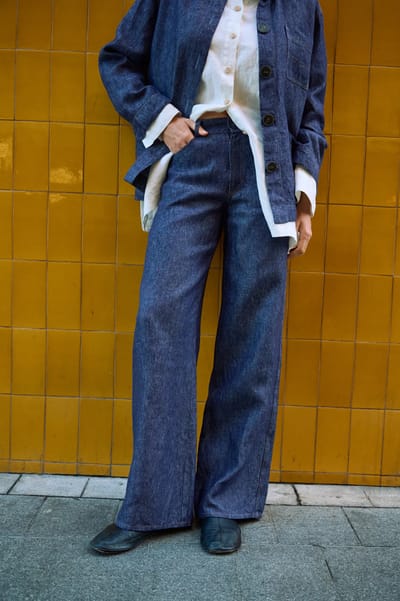
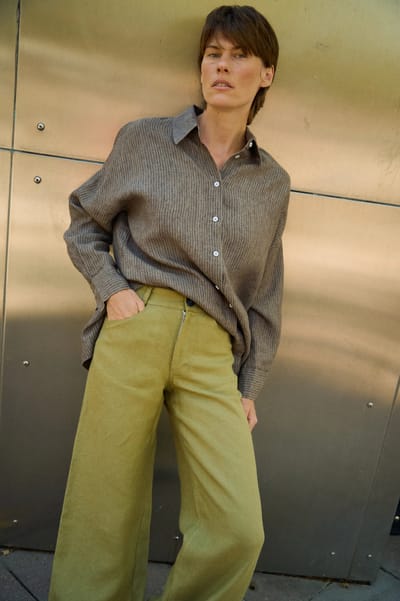
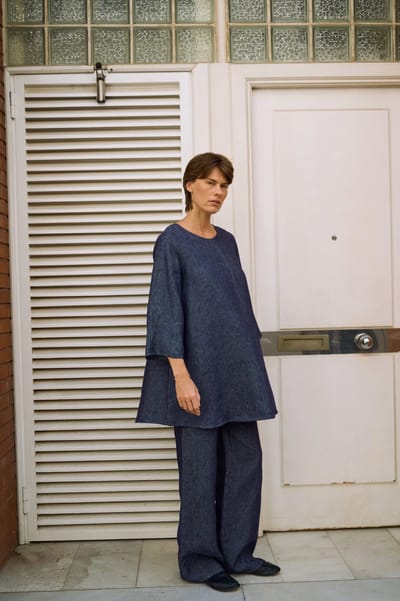
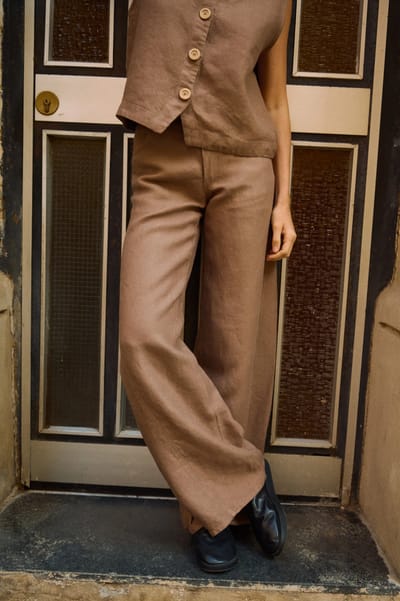
Live picks: prices and availability updated Sep 23, 2026


Which is the greener choice?
If you care about the environmental side, linen has a real head start, and the reason ties straight back to the plant.
Flax, the plant linen is made from, grows happily in the cool, rainy "flax belt" of Western Europe (mostly France, Belgium, and the Netherlands). Grown there, it's almost entirely rain-fed, meaning it needs little or no irrigation, and it gets by with very little fertilizer or pesticide. Hardly any of the plant is wasted.
Conventional cotton is a different story. It's a thirsty crop, often grown in dry regions that rely on heavy irrigation. The World Wildlife Fund estimates it takes around 2,700 liters of water to make a single cotton t-shirt: by its own description, "enough water for one person to drink for 900 days or almost two and a half years." Cotton is also chemical-heavy: the UN Environment Programme says cotton is responsible for 24% of insecticides and 11% of pesticides used worldwide, even though it's grown on only a small share of farmland.
You don't have to give up cotton to shop greener, though. Organic cotton is grown without synthetic pesticides or fertilizers. Textile Exchange's life-cycle research found it can use far less water and energy than conventional cotton, though the group cautions those headline savings partly reflect comparing rain-fed organic farms with irrigated conventional ones, so treat them as a direction, not a guarantee. If you love cotton, organic is the more responsible pick: see our picks for the best organic cotton t-shirts or read the organic cotton material guide.
One myth worth clearing up: clothing's overall climate footprint is real but often overstated online. The UN Environment Programme estimates the whole fashion sector is responsible for somewhere between 2% and 8% of global greenhouse gas emissions (a wide, honest range, not the scarier numbers that get passed around). And here's a genuine plus for both fabrics: because linen and cotton are natural fibers, neither sheds plastic microfibers in the wash. That microplastic problem comes from synthetics like polyester and nylon, not from plant fabrics.
Is linen or cotton better for sensitive skin?
Good news first: both are gentle, breathable, natural fabrics, and most people wear either with no trouble. If your skin reacts to clothing, the fabric itself is usually not the culprit.
Dermatology sources are clear on this. Skin reactions to clothes are almost always caused by the dyes and chemical finishes added to fabric, not the fiber. The most common offenders are a group called disperse dyes, which are mainly used on synthetic fabrics, plus the formaldehyde-based resins sometimes added to make clothes wrinkle-resistant. (That's worth knowing: a "wrinkle-free" finish is exactly the kind of treatment that can irritate sensitive skin.) The plain plant fibers in linen and cotton rarely cause problems on their own.
So the smart move isn't choosing one fiber over the other; it's choosing cleaner processing. That's where two labels help, and they do different jobs:
- GOTS (the Global Organic Textile Standard) is the stricter, fuller label. It covers the whole journey from organic farm to finished garment, and it bans the harsh stuff (no toxic dyes, no formaldehyde, no chlorine bleach) while also setting fair-labor rules. If a tag says GOTS, both the growing and the processing were checked. Learn what it covers on our GOTS certification guide.
- OEKO-TEX Standard 100 is about safety of the finished product. It tests the actual garment (threads, buttons and all) against a long list of harmful substances. It doesn't tell you how the fiber was farmed, but it does tell you the thing touching your skin was screened. Details are on our OEKO-TEX certification guide.
A quick label tip while we're here: not every "natural-sounding" fabric is natural. "Bamboo" clothing, for example, is almost always a semi-synthetic: a plant that's been broken down and rebuilt with chemicals into rayon. The U.S. Federal Trade Commission requires it to be labeled "rayon made from bamboo" for exactly that reason, and in 2022 it fined two major retailers millions for getting that label wrong. Linen and cotton are the real thing: plant fibers cleaned and spun mechanically, not chemically rebuilt.
So which should you buy for summer?
Here's the honest verdict, by situation.
Reach for linen if your summers are hot and humid, if you sweat a lot, or if you spend long days outdoors. Choose it for breezy shirts, dresses, and loose trousers where airflow matters most. Buy it knowing it'll wrinkle, and that it'll likely outlast everything else in your closet. It costs more up front, mostly because flax is slow and labor-intensive to turn into fabric, but spread over decades of wear it's often the better value. Start with our women's linen dresses or the full linen collection.
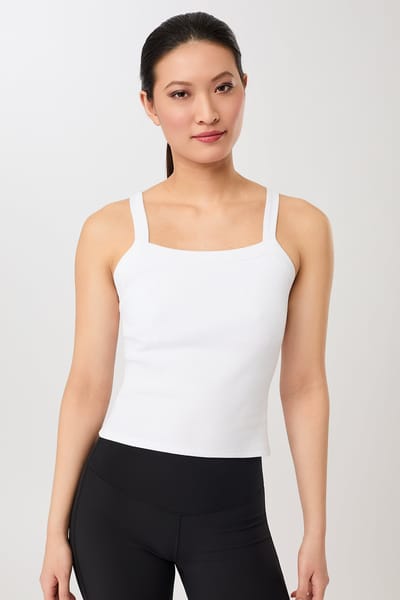
Reach for cotton for mild warm days, indoor and air-conditioned settings, soft close-to-skin basics like tees and underwear, and anytime you want low fuss and a lower price. If you want cotton's comfort with a lighter footprint, make it organic. Browse our cotton tops.
And if you genuinely can't decide, a linen-cotton blend gives you much of linen's cool, airy feel with cotton's softness and fewer wrinkles. For most people building a summer wardrobe, the real answer isn't one fabric; it's a mix. Want the bigger picture on plant and animal fibers? Our natural fiber clothing guide ties it all together.
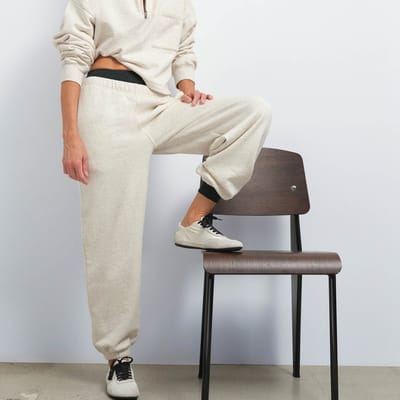
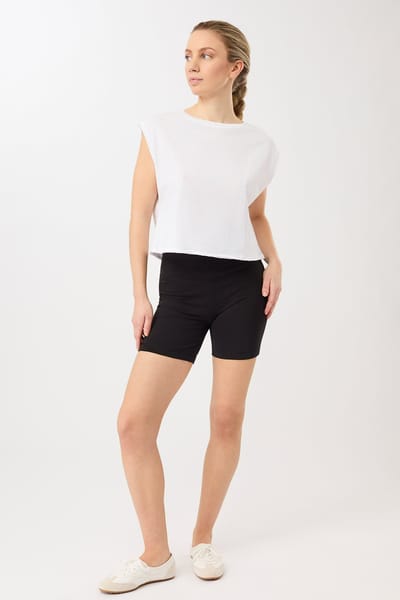
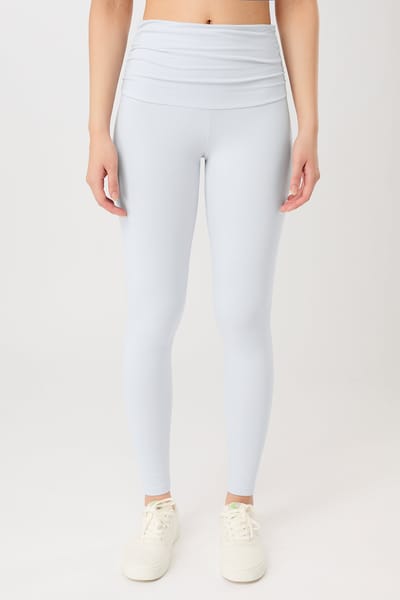
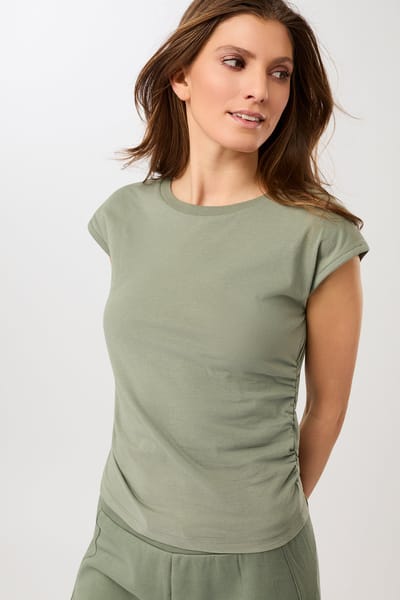
Live picks: prices and availability updated Sep 25, 2026
Sources & further reading
Reporting and expert interviews from The Washington Post (textile scientists Sundaresan Jayaraman of Georgia Tech, Yiqi Yang of the University of Nebraska–Lincoln, and Larissa Marie Shepherd of Cornell); the U.S. Federal Trade Commission (textile labeling and bamboo/rayon rules); the Global Organic Textile Standard (GOTS); OEKO-TEX; the UN Environment Programme (UNEP); the World Wildlife Fund (WWF); Textile Exchange; the Alliance for European Flax-Linen & Hemp (CELC); and DermNet on textile contact dermatitis.
This article offers general information, not medical advice. If you have a skin condition or persistent reaction to clothing, see a healthcare professional.
Frequently asked questions
Is a linen-cotton blend cooler than 100% cotton?
Usually yes. Adding linen opens up the weave and improves how the fabric moves moisture, so a blend tends to feel airier and dry faster than pure cotton. You won't get quite the full cooling effect of 100% linen, but you'll get most of it, with softer feel and fewer deep wrinkles. Blends are a popular pick for travel and for people who like linen's comfort but dislike its creasing.
Does linen shrink more than cotton after washing?
Linen can shrink a little the first time it's washed, especially with heat, and cotton can shrink too. The fix for both is the same: wash in cool or lukewarm water and avoid high dryer heat. Many linen and cotton garments are pre-washed or pre-shrunk to limit this, so check the care label, and when in doubt, air-dry or pull items from the dryer while still slightly damp.
Why is linen so much more expensive than cotton?
It comes down to how each is made. Cotton is grown around the world in huge volumes and harvested by machine, which keeps it cheap. Flax for linen grows well only in a narrow region of Western Europe, and turning its long fibers into fabric takes several careful, slower steps. More labor and lower volumes mean a higher price tag, but also a fabric that tends to last far longer.
Can I wear linen if I don't like ironing?
Yes, you just have to make peace with a relaxed look, because linen is meant to be a little rumpled. The easiest trick is to pull it from the wash slightly damp, give it a shake, smooth it with your hands, and hang it to dry; gravity removes a lot of the creases for free. If you want it crisp, iron or steam it while it's still slightly damp. Or choose a linen-cotton blend, which wrinkles less.
Is cotton or linen better for summer bed sheets?
Both are good, and it mirrors the clothing answer. Linen sheets breathe more and feel cooler and drier, which hot sleepers tend to love, and they last for years. Cotton sheets feel softer and smoother right away and cost less. If you sleep hot or live somewhere humid, linen is the stronger choice; if you want instant softness and easy care, cotton wins.
About the editor
Urša Satler is the founder of Purefect Choice, an online non-toxic goods shop in Slovenia. She stocks what she and her family actually need and use themselves, chosen on material composition and certification.
She started MaterialFilter for a plainly selfish reason: she was tired of checking labels in shops one garment at a time, and tired of hunting for fibre content buried five clicks deep on a product page, usually to discover that a beautiful dress was mostly polyester. MaterialFilter does that checking once, up front, so the composition is the first thing you see instead of the last thing you find.
She sets the standard this site scores against and owns its editorial direction. What she brings to it is the habit of reading a composition label before anything else (daily, for her own family and the shop she runs) and one rule that keeps that habit honest: every claim on MaterialFilter is meant to be checkable against a certification body's own public register, so you never have to take her word for it.