Modal
Updated Aug 19, 2026 11 mins read
Edited by Urša Satler
Some retailers on this page pay us a commission when you buy through our links. It costs you nothing, and it never affects our rankings or filtering. Learn more
If you own a T-shirt or a pair of underwear that feels almost suspiciously soft (smoother than cotton, with a cool, silky drape), check the tag. There's a good chance it says modal. Brands love to describe it as "plant-based," "made from beech trees," even "natural." The first two are true. The last one isn't.
Modal is rayon: a fiber that starts as real wood but gets dissolved in strong chemicals and rebuilt into thread. Specifically, it's the second-generation, upgraded version of viscose. That upgrade is real and worth understanding: modal genuinely wears and washes better than ordinary viscose. But the chemistry underneath is largely the same, and it's dirtier than the newer lyocell process. Here's the whole picture, in plain English.
Key takeaways
- Modal is a semi-synthetic fiber: beech wood (usually) dissolved in chemicals and rebuilt into thread. It is not a natural fiber, no matter how botanical the marketing sounds.
- It's an engineered upgrade of viscose: noticeably softer, and it keeps most of its strength when wet, so it survives machine washing and holds its shape far better.
- It's still made with the viscose process and its carbon disulfide chemistry. How clean that is depends almost entirely on whether the mill recovers its chemicals: Lenzing publishes recovery figures; many generic mills don't.
- If you want the cleanest fiber in this family, lyocell (TENCEL) uses a different solvent in a closed loop. Modal is not lyocell, even when both carry Lenzing's TENCEL brand.
- On the fiber tag, "modal" is a recognized generic name. A branded fiber like TENCEL Modal or Lenzing Modal tells you who made it, and with this fiber family, traceability is most of the story.
What is modal fabric?
Modal is a regenerated cellulose fiber: the textbook name for the in-between family of fabrics that begin as a plant but are chemically dissolved and re-formed. Viscose, modal, lyocell, cupro, and the "bamboo" fabric we cover in our bamboo explainer all live in this group. Skip the jargon and remember it as "natural plant, rebuilt with chemicals."
What makes modal distinct is a piece of 1950s engineering. Ordinary viscose has a famous weakness: it goes weak and unstable when wet, which is why older rayon garments stretched, shrank, and fell apart in the wash. Japanese researchers worked out a modified process that produces a fiber with high wet modulus, meaning it resists stretching and keeps most of its strength when soaked. Those fibers were first sold as "polynosic"; the generic name that stuck was modal. The industry body BISFA, which defines fiber names, reserves "modal" for viscose-type fibers that meet minimum strength and wet-stability thresholds, so the name is a performance claim, not just branding.
The raw material is wood pulp, most commonly from beech trees. Beech grows across Central Europe without irrigation or the pesticide load of a cotton field, and it regenerates naturally in managed forests. That's a genuinely nice origin story. Just keep the lesson from every fiber in this family in mind: the plant's virtues don't automatically carry over to the fabric. What happens in the mill matters more.
How is modal made?
The short version, because the details explain both the strengths and the problems:
- Beech wood is chipped and refined into a high-purity dissolving pulp.
- The pulp is steeped in caustic soda, then reacted with carbon disulfide (the same chemical used for ordinary viscose), turning it into a thick, honey-like solution.
- The solution is forced through fine nozzles into an acid bath, where it hardens into filaments. For modal, the spinning bath and the stretch applied to the fresh fiber are tuned differently, which lines the cellulose molecules up into a more ordered, more crystalline structure.
- The fiber is washed, cut, and spun into yarn.
Step three is the whole upgrade: better-aligned cellulose is what gives modal its wet strength and fine, smooth feel. Step two is the problem that never went away. Carbon disulfide is genuinely toxic; a century of occupational-health research on rayon factories links heavy exposure to nerve and heart damage in workers. A well-run modern mill captures and recycles most of it. A badly run one releases it into the air and water around the plant. From the outside, the fabric looks identical either way, which is why who made the fiber is the most important question you can ask about modal.
Is modal natural or synthetic?
Neither, and anyone selling it as "natural" is rounding up.
Textile regulators and fiber scientists sort fabrics into three buckets: natural fibers (grown by a plant or animal and mechanically cleaned and spun: cotton, linen, hemp, wool, silk), pure synthetics (made from oil, like polyester and elastane), and the regenerated in-between group, where modal sits. The fiber's carbon came from a beech tree, and that has real consequences: it biodegrades like a plant fiber, not like plastic. But the fiber itself was built in a chemical plant, not grown in a field.
| What the tag says | What it is | Natural? |
|---|---|---|
| Modal, micromodal | High-wet-modulus rayon, usually from beech | No, rebuilt with chemicals |
| TENCEL Modal / Lenzing Modal | The same fiber, made by Lenzing with published sourcing and recovery data | No, but traceable |
| Viscose, rayon | The older, weaker-when-wet sibling | No |
| Lyocell / TENCEL Lyocell | Same family, cleaner closed-loop solvent process | No, but the tidiest of the group |
| Cotton, linen, hemp, wool | True natural fibers | Yes |
Labeling law agrees. The EU's textile regulation lists "modal" as its own generic fiber name, and U.S. FTC rules accept the same international fiber names, so an honest label reads "modal," not "beech" or "plant fiber."
Modal vs. viscose: what the upgrade actually buys you
Since modal is viscose's direct descendant, this comparison is the clearest way to see what you're paying for:
- Wet strength. Ordinary viscose can lose a third to half of its strength when wet; hence all the "dry clean only" and "hand wash cold" tags on viscose dresses. Modal is engineered to keep most of its strength in the wash. It's the difference between a fiber you baby and a fiber you live in.
- Shape and shrink. That same wet stability means modal shrinks and bags out far less than viscose. It holds its shape through repeated machine washing, which is exactly why it ends up in everyday basics rather than occasionwear.
- Softness. Modal is spun fine (often finer than a cotton fiber) with a smooth surface. It reads as softer and silkier than both viscose and most cotton jersey.
- Same chemistry. None of this changes the production route. Modal is made with the carbon-disulfide viscose process, and its environmental footprint depends on the mill, not on the word "modal."
If you're choosing between a viscose tee and a modal tee, modal is simply the better-engineered product. Whether either is cleanly made is a separate question, which is the next section.
Modal vs. lyocell: the solvent is the whole story
Modal and lyocell get confused constantly, partly because Lenzing sells both under the TENCEL brand. They are not the same fiber, and the difference matters if you care how your clothes are made.
Lyocell dissolves wood pulp directly in an organic solvent called NMMO (no carbon disulfide at any point) and runs in a closed loop that Lenzing says recovers more than 99% of the solvent. That's a genuinely different, fundamentally tidier chemistry, and it's why we treat TENCEL lyocell as the benchmark for this fiber family.
Modal still uses the old viscose chemistry, tuned for a stronger fiber. A good mill can recover much of its carbon disulfide and sulfur, and Lenzing reports high recovery rates at its integrated Austrian plant, but "high recovery in a well-run plant" is a weaker guarantee than "the toxic chemical is not used at all."
In the hand, the two are close: both are soft, smooth, and drapey, with modal usually reading slightly softer and lyocell slightly cooler and crisper. If the feel is a tie and the price is a tie, lyocell is the cleaner pick. Where modal wins is availability: it has decades of head start in underwear and basics.
Lenzing Modal vs. generic modal
"Modal" on a tag tells you the fiber type. It tells you nothing about the mill, and with a viscose-process fiber, the mill is most of the environmental story.
Lenzing (the Austrian producer behind the TENCEL brand) makes its modal at an integrated site in Austria: pulp and fiber are produced in one place, beech wood is sourced from certified European forests (Lenzing points to PEFC and FSC certification), the company publishes chemical-recovery and emissions data, and its modal carries the EU Ecolabel: an independent, government-backed environmental label. You don't have to take Lenzing's marketing at face value to see the point: the numbers exist and can be checked.
Generic modal (much of it from large Asian producers) spans everything from well-run plants to mills that investigative reports have caught polluting outright. The Changing Markets Foundation's "Dirty Fashion" investigations documented untreated discharge and worker exposure at viscose-family mills in Asia. Separately, the conservation nonprofit Canopy audits this industry because dissolving pulp has been traced to ancient and endangered forests. None of that proves any particular modal garment is dirty; it proves you can't tell from the fiber name alone.
Our honest rule of thumb: unbranded modal at a rock-bottom price tells you nothing about how it was made, and with this fiber family, "nothing" is not reassuring. Branded fiber (TENCEL Modal, Lenzing Modal) doesn't make a garment "sustainable," but it makes the supply chain checkable, which is the minimum bar this site cares about.
How does modal feel and wear?
Credit where due, modal earns its place in your softest clothes:
- Softness and drape. Fine, smooth fibers make a fabric that feels silky and falls fluidly. Micromodal (an even finer version) is about as soft as knit fabric gets.
- Cool and absorbent. Modal absorbs moisture readily (more so than cotton) and feels cool against the skin, which is why it's everywhere in underwear and summer basics.
- Color. It takes dye deeply and holds it well, so blacks stay black through more washes than most cotton.
- Pilling. Better than ordinary viscose and much short-staple cotton, thanks to the smooth, fine fiber. But featherweight micromodal knits are delicate by nature: thin loungewear can thin out and pill at friction points like hips and underarms.
- Care. Machine wash cool, skip chlorine bleach (it attacks cellulose), tumble low or hang dry. Unlike viscose, modal tolerates this routine without drama.
The trade-offs: modal holds less structure than cotton (a modal tee clings and flows rather than standing crisp), and it isn't as hard-wearing as hemp or linen over years of use.
Where you'll find modal (and why)
Modal's profile (soft, absorbent, wash-stable, inexpensive at scale) maps exactly onto underwear, T-shirts, loungewear, pajamas, and sheets. That's where you'll meet it.
You'll usually meet it in a blend. Modal + cotton adds softness and drape to a tee while keeping some of cotton's body. Modal + elastane is the standard underwear recipe: a few percent of stretch fiber so the waistband recovers. Read the percentages: "cotton-modal blend" can mean anything from 5% modal to 95%, and the number changes what you're actually buying.
What certification labels can and can't tell you
- OEKO-TEX Standard 100 tests the finished product for harmful residual chemicals. A modal garment can absolutely carry it: the label answers "is this safe to wear?", not "was the mill clean?"
- GOTS is built for organic natural fibers, and it caps regenerated fibers like modal at a small share of a certified garment (10% for most products). A mostly-modal garment can't be GOTS "organic," and once wood is dissolved into rayon, GOTS no longer counts it as natural, a position we think is exactly right.
- EU Ecolabel on the fiber (Lenzing's modal holds it) covers environmental criteria in production: emissions, chemical recovery, sourcing. This is the label that actually speaks to the mill question.
- FSC / PEFC on the pulp speaks to forestry, not chemistry: the trees were sourced responsibly, whatever happened afterward.
No single label covers everything. OEKO-TEX plus a branded, Ecolabel-certified fiber is about as well-vouched as modal currently gets.
How to read a modal label
Thirty seconds, four checks:
- Find the generic fiber name. "Modal" (or "micromodal") on the composition tag is the honest baseline. "Beech fiber," "plant-based," or "eco fabric" in the product copy with no "modal" on the tag is marketing fog.
- Look for a fiber brand. TENCEL Modal or Lenzing Modal means traceable fiber with published data behind it. No brand means you know nothing about the mill.
- Read the percentages. 95% modal / 5% elastane is a modal garment. 60% cotton / 35% modal / 5% elastane is a cotton garment with better drape. Both are legitimate; just know which one you're paying for.
- Discount "natural" claims on sight. Any listing that calls modal a natural fiber has already told you how carefully it was written.
For the general version of this skill, see our guide on how to read material labels.
Natural alternatives if you want the real thing
Modal is a fine fabric bought with open eyes. But if what drew you to it was the "made from trees" pitch (the idea of wearing something that came from a plant), you can skip the chemical rebuild entirely and get the real article. Organic cotton covers the same soft-tee-and-underwear territory modal dominates, grown rather than manufactured, and certifiable under GOTS from field to finished garment. Linen beats modal at its own summer game: cool, absorbent, and dramatically more durable, and hemp does the same with an even lighter agricultural footprint. Every product on this site shows its verified fiber composition, so you can see exactly what you'd be trading.
Live picks: prices and availability updated Sep 25, 2026
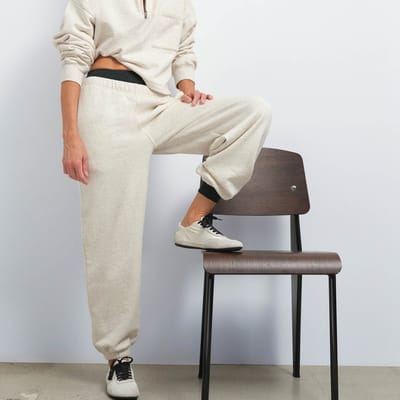
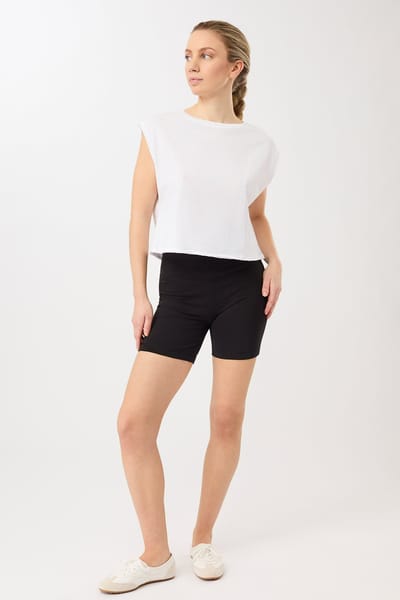
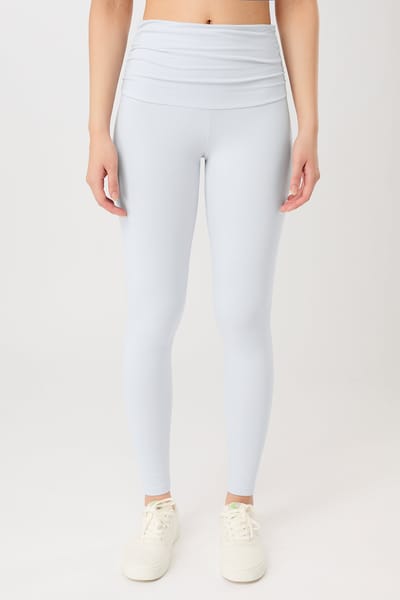
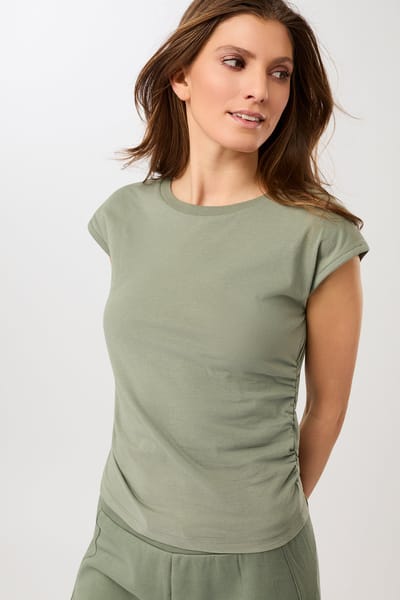
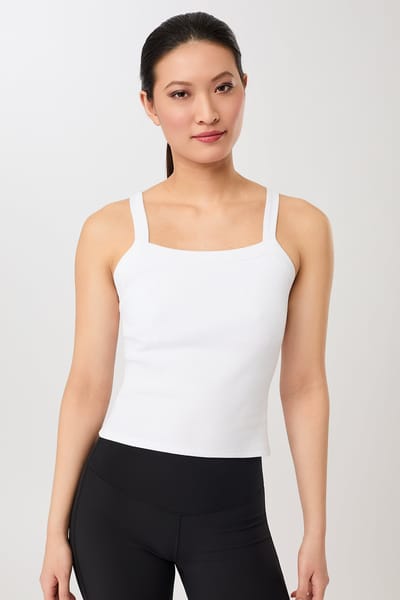
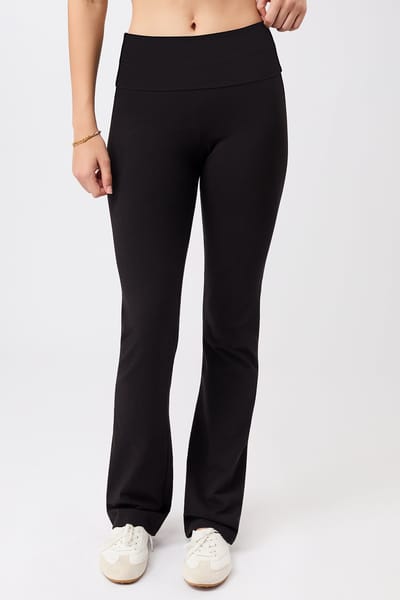
Prefer to browse by category? Start with our cotton tops or the linen collection, or read the full natural fiber clothing guide for the map of the whole territory.
Live picks: prices and availability updated Sep 23, 2026
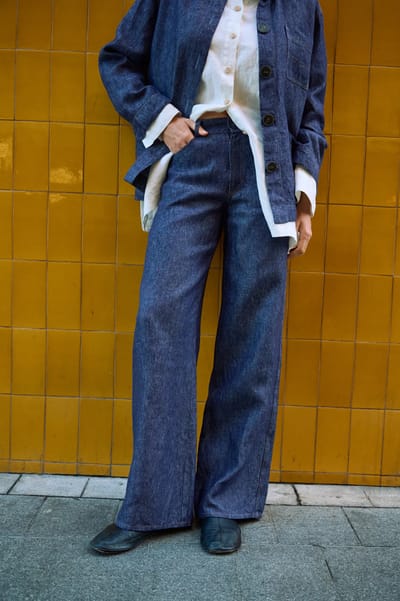

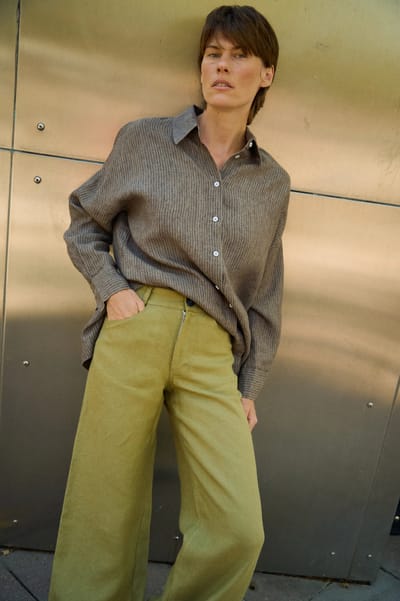


Sources & further reading
BISFA (fiber terminology and the generic definition of modal), the EU Textile Regulation 1007/2011 and U.S. FTC textile labeling rules (generic fiber names), Lenzing sustainability reporting (beech sourcing, chemical recovery, EU Ecolabel for its modal), the EU Ecolabel scheme, Changing Markets Foundation ("Dirty Fashion" investigations of viscose-family mills), Canopy / CanopyStyle (forest sourcing of dissolving pulp), GOTS (regenerated-fiber limits), OEKO-TEX (Standard 100), and occupational-health literature on carbon disulfide in rayon manufacturing.
Frequently asked questions
Is modal a natural fabric?
No. Modal starts as real wood (usually beech), but the wood is dissolved in strong chemicals and rebuilt into fiber, which makes it a semi-synthetic (regenerated cellulose) fiber, the same family as viscose and lyocell. It's fair to call it plant-based or wood-based; it's not accurate to call it natural. True natural fibers like cotton, linen, hemp, and wool are cleaned and spun from the plant or animal without being chemically dissolved.
What's the difference between modal and viscose?
They're made from the same raw material with closely related chemistry, but modal is the engineered upgrade: it's spun under conditions that produce a finer, more ordered fiber with high wet strength. In practice that means modal survives machine washing, shrinks less, holds its shape better, and feels softer than ordinary viscose, which weakens dramatically when wet. Environmentally they're siblings: both depend on how well the mill recovers its process chemicals.
Is modal better than cotton?
Different, not better. Modal is softer, more absorbent, drapes more fluidly, and holds dye better, which is why it rules underwear and loungewear. Cotton has more body and structure, is generally more durable, and as a natural fiber it can be certified organic under GOTS from farm to garment, which no modal can. If verified natural fiber is what you're shopping for, organic cotton is the like-for-like alternative in every category where modal shows up.
Does modal shrink in the wash?
Far less than viscose, which is the main reason it exists. Modal was engineered for high wet strength, so it tolerates regular machine washing without the shrinking and bagging that plague ordinary rayon. Wash cool, avoid chlorine bleach, and dry on low or hang; treated that way, a modal garment holds its size and shape about as well as good cotton jersey.
What is micromodal?
Micromodal is modal spun to an even finer fiber: the same chemistry and the same beech-to-rayon process, just thinner filaments. Finer fibers mean a softer, silkier, more flexible fabric, which is why micromodal is the signature material of premium underwear and ultralight loungewear. The trade-off is delicacy: very fine knits can thin and pill at friction points sooner than sturdier fabrics.
About the editor
Urša Satler is the founder of Purefect Choice, an online non-toxic goods shop in Slovenia. She stocks what she and her family actually need and use themselves, chosen on material composition and certification.
She started MaterialFilter for a plainly selfish reason: she was tired of checking labels in shops one garment at a time, and tired of hunting for fibre content buried five clicks deep on a product page, usually to discover that a beautiful dress was mostly polyester. MaterialFilter does that checking once, up front, so the composition is the first thing you see instead of the last thing you find.
She sets the standard this site scores against and owns its editorial direction. What she brings to it is the habit of reading a composition label before anything else (daily, for her own family and the shop she runs) and one rule that keeps that habit honest: every claim on MaterialFilter is meant to be checkable against a certification body's own public register, so you never have to take her word for it.