Linen vs Tencel: Which Should You Choose?
Published Nov 6, 2026 15 mins read
Edited by Urša Satler · Editorial policy
In this article
If you remember only one thing, make it this. Linen and TENCEL lyocell both wear cool and comfortable, but they get there in opposite ways, and only one of them is a true natural fiber. Linen is flax, combed and spun straight from the plant by machine. TENCEL lyocell is wood pulp that's been chemically dissolved in a solvent and pushed back out as brand-new fiber. It's plant-based and responsibly made, but regenerated rather than natural. Both end up as cellulose, both breathe, and neither sheds plastic in the wash. In dry heat, linen's airflow usually wins; in sticky, high-sweat humidity, lyocell's smooth wicking often feels drier. Lyocell is softer and less wrinkly straight out of the bag. Linen is stronger and longer-lasting, and it's the only one of the two that's actually natural.
That last point matters here, but it isn't a verdict. Made well, lyocell is one of the cleanest fabrics in the whole manufactured family, and on a muggy, sweaty day it can feel better against your skin than linen does. Both are respectable. The real question isn't which is "better". It's what each fabric actually is, and which one fits your day, your climate, and how much fuss you want. Sort out the "is it natural?" question first, and the comfort, durability, and eco trade-offs all fall neatly into place behind it.
We earn a commission when you shop through our links, at no extra cost to you.
Key takeaways
- Only linen is a natural fiber. Flax is spun mechanically from the plant and never dissolved; lyocell is wood pulp chemically dissolved and re-formed. It's plant-based, but regenerated (semi-synthetic).
- Both breathe and both biodegrade. Neither sheds microplastics the way polyester does, and on raw absorbency they're close, with neither far ahead.
- Linen for dry heat, lyocell for humid heat. Linen cools by moving air; lyocell wicks sweat off your skin when the air is too still and damp for airflow to help.
- Linen lasts longer and gets stronger wet; lyocell resists wrinkles and feels softer new. A genuine trade-off, not a winner and a loser.
- Lyocell needs gentler care (cool, delicate wash, no high heat). Linen is the more forgiving of the two.
- "TENCEL" is a brand, not a fiber name. On a label it has to appear as lyocell. Look for it by name. A plain "viscose" or "rayon" tag is the older, dirtier process.
Is linen a natural fiber — and is TENCEL?
This is the backbone of the whole comparison, so it's worth getting exactly right. Linen is a bast fiber. The long fibers are pulled from inside the flax stalk, left to break down naturally in the field ("retting"), then combed and spun. The plant is cleaned and mechanically worked, never chemically taken apart. That's the textbook definition of a natural fiber, and it's why linen sits alongside cotton and wool. Our linen explainer goes deeper on how flax becomes cloth.
Lyocell takes a different road. Wood pulp (usually eucalyptus or beech) is dissolved in a solvent called NMMO, then extruded through fine nozzles and precipitated back into new filaments. It starts as a plant, but it's been dissolved and rebuilt, which makes it a regenerated cellulosic, or semi-synthetic fiber. Both linen and lyocell are cellulose at the finish line; only linen gets there without ever being liquefied. This is a classification point, not a quality verdict. It just tells you what you're wearing. Our TENCEL/lyocell explainer walks through the process in detail.
Labeling law draws exactly this line. In the United States, the FTC defines lyocell as regenerated cellulose and files it under the rayon umbrella, so a US tag may read "lyocell" or "rayon (lyocell)." In the EU, Regulation 1007/2011 lists "flax (or linen)" and "lyocell" as separate reserved fibre names, and only those official names may state what a garment is made of. In both places, "TENCEL" is a brand (Lenzing's) and cannot replace the generic fibre name on the tag. If you want to read a label properly, our guide on how to read material labels shows what to look for.
Lyocell is not ordinary viscose or rayon, which is worth spelling out because the family confuses people. It's the cleanest member of that regenerated-cellulose family, made with a recoverable solvent in a closed loop rather than the older carbon-disulphide process. We lay out that distinction in our viscose explainer. So on this natural-fiber site, lyocell is the well-made exception in a family we're usually cautious about. It's still a processed fiber, not a natural one.
Which one keeps you cooler?
Both fabrics are genuinely comfortable in the heat, but they cool you in different ways. That's where a real preference emerges, so it's worth understanding the mechanism rather than memorizing a winner.
Linen's trick is airflow. Flax conducts heat efficiently, and its stiff fibers hold the cloth slightly off your body instead of letting it cling, so air moves through and around it. Textile references describe linen as conducting heat well and suiting hot climates for exactly this reason. The Alliance for European Flax-Linen & Hemp (the European flax trade body, so read it as advocacy) says linen "allows more air flow" and is highly permeable to water vapour, meaning perspiration. Strip away the industry framing and the underlying point holds. An open linen weave moves a lot of air and sweat vapour. Linen also carries a large sweat buffer. Textile sources say it can absorb around 20% of its weight in moisture before it starts to feel damp, so it stays comfortable as you heat up, then releases that moisture to the air.
Lyocell works closer to the skin. Its fibers have a fine internal nanofibril structure, with sub-microscopic channels that draw moisture into and through the fiber and spread it out to evaporate. That structure is established fiber science; the performance story built on top of it ("a drier microclimate on the skin") comes largely from Lenzing, TENCEL's maker, and hasn't been pinned to an independent controlled figure, so treat the wording as informed marketing rather than proven fact.
This is the part to remember. In genuinely hot, dry heat, linen is usually the cooler fabric. Airflow, off-body drape, and heat conduction all work together, but they need moving, dry air to do their job. In hot and humid or high-sweat conditions, that airflow advantage gets blunted, and lyocell's absorbency and smooth, quick wicking can keep your skin feeling drier. There's no single controlled study that settles this; it's fiber-property reasoning plus broad buying-guide consensus, so hold it as an informed rule of thumb, not a law. (You'll see very specific cooling numbers floating around online. We couldn't trace any of them to a real study, so we don't repeat them.)
On raw moisture absorption, the two are closer than you'd guess. Standard moisture regain lands around 10–12% for linen and about 11% for lyocell, versus roughly 7–8.5% for cotton and a near-nothing 0.4% for polyester. Both plant-cellulose fibers absorb far more than any synthetic; against each other, neither has a dramatic edge. What differs is how each handles it. Linen buffers and ventilates, while lyocell transports and dries. Against linen specifically, lyocell has no absorbency advantage. The difference is the mechanism, not the amount.
Linen vs TENCEL lyocell at a glance
The short version, side by side.
| What you're weighing | Linen (natural) | TENCEL lyocell (regenerated) |
|---|---|---|
| Fiber type | Natural bast fiber, mechanically spun | Semi-synthetic, chemically regenerated |
| Cool in dry heat | Excellent (airflow and off-body drape) | Good |
| Cool in humid, sweaty heat | Good; airflow blunts in still air | Excellent (fast wicking) |
| Softness when new | Crisp, softens over years | Silky and soft right away |
| Drape | More body and structure | Fluid, closer to silk |
| Wrinkles | Creases readily (part of the look) | Resists wrinkles noticeably better |
| Strength | Very strong; stronger when wet | Strong for its family; loses a little wet |
| Pilling | Long fibers resist it | Can fibrillate (fuzz) with wet rubbing |
| Care | Forgiving (cool wash, line dry) | Gentle (cool/delicate, no high heat) |
| Longevity | Often decades | Durable but more care-sensitive |
| Best for | Hot dry days; hard wear; all-natural wardrobes | Humid heat; silky drape; low-iron ease |
How do they feel, drape, and wrinkle?
Pick either fabric up and the difference is immediate. Lyocell feels smooth, silky, and soft straight off the bolt. Its fine, uniform surface is why it suits close-fitting, next-to-skin pieces. Linen starts crisp and a little textured, sometimes even rough (that's the flax, not a flaw), and some people bounce off that first touch. But linen is the fabric that earns its softness, settling into a broken-in hand over five to ten years of washing and wear. So immediate smoothness goes to lyocell; lived-in softness goes to linen. Neither is a defect. It's a preference.
Drape splits the same way. A peer-reviewed review of the lyocell process credits it with excellent draping, which is why it's a favorite for flowy dresses and drapey blouses. Linen's stiffer fiber gives it structure and body. It holds a shape rather than pouring. Flowy or tailored is a look, not a quality gap.
Wrinkles are the clearest practical win for lyocell. Flax barely stretches (its fibers elongate only about 1.5–3% before breaking, versus 6–10% for cotton), and it recovers poorly, so once linen creases, the crease stays. Lyocell's more flexible fiber springs back better and resists creasing noticeably more. Be fair to both, though. Neither is a true no-iron fabric, and plenty of people count linen's relaxed rumple as part of its charm rather than a problem to solve.
Which one lasts longer — and how do you care for it?
If you want a fabric to wear hard for years, this is linen's strongest suit. Flax is one of the strongest natural fibers there is. Textile references agree it is stronger than cotton, though the figures they give vary widely and none comes from a single controlled test, and, unusually, it gets stronger when wet, gaining perhaps 10–20% in tensile strength. That's why linen shrugs off repeated laundering and why a good linen shirt or pair of trousers can last decades, softening rather than wearing out. Its long, smooth fibers also resist pilling.
Lyocell is durable too, impressively so for a regenerated fiber. It keeps about 85% of its strength when wet, where ordinary viscose or rayon can shed roughly half. That's a real, meaningful gap. A lyocell garment survives washing in a way a viscose one simply doesn't, which is exactly why lyocell shouldn't be lumped in with bargain-bin rayon (we untangle that family in our viscose explainer). But note the framing carefully. That's lyocell beating its own cousins, not beating linen. Against linen, lyocell still loses a little strength wet rather than gaining it, and it has one genuine wear weakness. Rubbed while wet, its surface can fibrillate, splitting into tiny microfibrils that show up as fuzz or pilling and can worsen with washing. Producers use special finishes to keep this in check (it's the same effect deliberately harnessed for soft "peachskin" fabrics), but as unwanted pilling, it's a mark against lyocell that linen's long bast fibers don't share.
Some retailers on this page pay us a commission when you buy through our links. It costs you nothing, and it never affects our rankings or filtering. Learn more
Live picks: prices and availability updated Nov 17, 2026


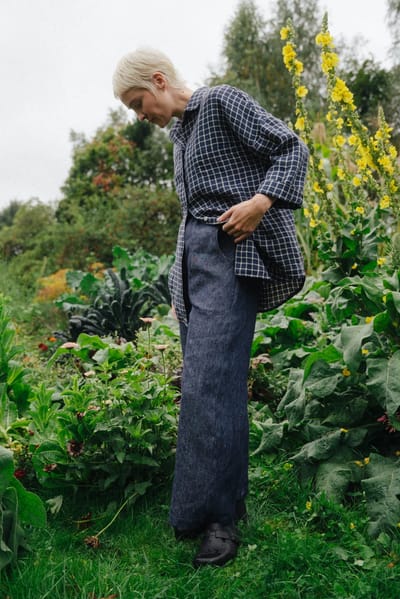
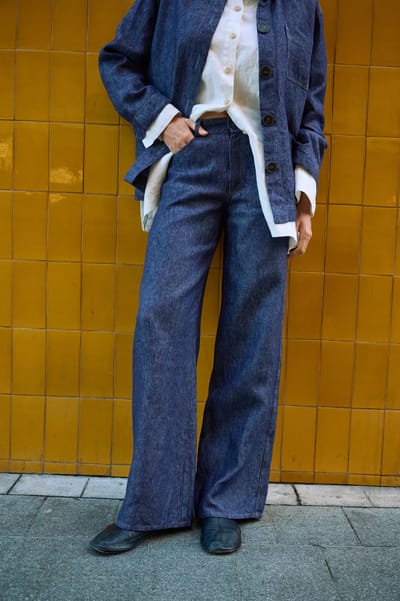
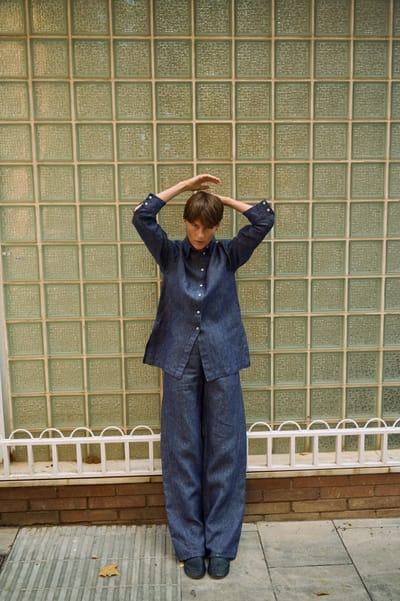
Browse the full linen collection if that's the direction you're leaning. Every product shows its declared fiber composition, so you can see exactly how much flax you're getting.
Care follows from all this. Linen is forgiving: a cool machine wash, a line dry, iron from damp if you want it crisp. It tolerates ordinary washing partly because it's stronger wet and doesn't pill. Lyocell asks for a gentler hand. Brand care guides consistently recommend washing TENCEL lyocell cold or at most around 30°C on a delicate cycle, inside out, skipping bleach and fabric softener, air-drying rather than tumble-drying, and ironing low while slightly damp; expect a few percent of shrinkage in the first washes. None of that is difficult, but it's more attention than linen needs. Both fibers also cost more than commodity cotton, for different reasons. Linen costs more because turning flax into fiber is slow and largely mechanical, lyocell because it's a branded fiber from a capital-intensive, closed-loop chemical plant. Neither premium is really about raw scarcity. And if avoiding synthetics entirely is the point, linen is the natural home for pieces like our polyester-free dresses, which list only dresses whose declared composition contains no polyester.
Which is the greener choice?
Both sit on the good side of the ledger (plant-derived, biodegradable, no plastic microfibers), so this is a comparison of two low-impact fibers, not a rescue mission. Start with what covers both. Linen and lyocell are cellulose, so both biodegrade and neither sheds persistent microplastics, the opposite of polyester. An independent seawater study (Royer and colleagues, published in PLOS ONE in 2023 by researchers at Scripps Institution of Oceanography) found cellulose fabrics disintegrated in roughly 30 days while polyester-containing fabric stayed largely intact past 200. Pure, undyed linen returns to the soil cleanly, and TENCEL lyocell carries a TÜV Austria certification for biodegradability and compostability. That's a real third-party mark, though the tidy "breaks down in 30 days" framing is Lenzing's own, and dyes, finishes, and synthetic blends slow all of this down.
On the process itself, linen has the simpler, lower-impact story. Flax fiber is extracted mechanically (retted and scutched with no chemical solvents), and the crop is essentially zero-waste: long fibers to cloth, shorter tow to yarns, woody shives to board and bedding, seed to linseed oil. The Alliance for European Flax-Linen & Hemp (again, the trade body) says about three-quarters of the world's flax fibre is grown in Western Europe (France, Belgium, the Netherlands), rain-fed, without irrigation; secondary sources round the long-fibre share to roughly 80%. Flax is also a low-input crop, needing little fertilizer and few pesticides and grown in rotation. "Low input" isn't "no input," though. As Good On You notes, non-organic flax is still grown with nitrate fertilizers that can run off, and only certified-organic flax guarantees no synthetic pesticides.
Lyocell's environmental case is a genuinely good one for a manufactured fiber. Its solvent (NMMO) is recovered in a closed loop (Lenzing says up to 99.8%, its own figure), and the process avoids the carbon disulphide that makes conventional viscose hazardous, which makes lyocell one of the cleanest regenerated fibers going. Its wood comes from FSC/PEFC-certified sources, and Canopy's Hot Button Report rates Lenzing among its top performers for responsible forest sourcing. But two caveats keep it from being simply "greener than linen." First, deforestation is a real risk for uncertified man-made cellulosics. Canopy estimates around 300 million trees are logged yearly for these fabrics, some from endangered forests, so the certification is what matters, not the "made from trees" story. Second, dissolving pulp and recovering solvent is energy-hungry. Higg Index-based data has put lyocell's carbon footprint roughly 50% higher than cotton's, depending heavily on the mill's electricity. (That methodology is contested and swings with the energy source, so treat single figures as directional, not definitive.)
To sum up fairly, linen leads on solvent-free simplicity and deforestation. Lyocell is impressively clean for a regenerated fiber but not automatically lower-impact than a natural one.
What about certifications and sensitive skin?
If you want a genuinely organic fiber, only linen can offer one. GOTS-certified organic linen exists, though organic flax is a tiny slice of the crop. A 100% lyocell garment can't be GOTS certified at all. The standard is built for organic natural fibers and, under GOTS 8.1, lets lyocell make up at most 30% of a product. So TENCEL leans on its own producer certifications instead. Watch the wording, too. The Masters of FLAX FIBRE mark (called European Flax until 2025) certifies origin and traceability, not organic farming. Our GOTS guide explains what the organic label actually covers.
For skin safety specifically, the fiber is rarely the issue. OEKO-TEX Standard 100 tests the finished textile for harmful residues regardless of what it's made of, so both linen and lyocell garments can and do carry it. And as dermatology sources like DermNet point out, clothing irritation usually traces to dyes and finishing chemicals (formaldehyde-based anti-wrinkle resins, certain disperse dyes), not to the base cellulose fiber, and true allergy to flax or cellulose is uncommon. Both linen and lyocell are gentle next to skin; lyocell's smoother out-of-box hand is a comfort preference, not a safety advantage. The reliably useful habit is to wash any new garment before wearing it, which rinses off much of the surface residue. (Lenzing also reports an EU Ecolabel licence for TENCEL Lyocell at the fiber level, an independent EU scheme. Linen fabrics can earn the same label, but at the product level rather than by default.)
So which should you buy?
The answer depends on what you value.
Reach for linen if you want a true natural fiber, if your heat is dry, if you sweat a lot and want a fabric you can wash hard, or if you're buying something to keep for years. It wrinkles, and it starts crisp. Buy it knowing both, and knowing it'll likely outlast everything around it and get softer doing so. Start with our women's linen dresses, linen tops, or the full linen collection.
Lean toward lyocell if you live somewhere hot and humid where fast wicking beats airflow, if you love a silky, fluid drape, if visible creases bother you, or if you want maximum next-to-skin softness from day one, and if you're comfortable with a plant-based fiber that's manufactured rather than strictly natural. Just go in clear-eyed. It asks for gentler washing, and to get the clean version you want the words "TENCEL Lyocell" on the tag, not a bare "rayon." (MaterialFilter focuses on natural fibers, so you'll find far more linen than lyocell here.)
And if you can't choose, a linen-lyocell blend is a real middle ground. The lyocell adds softness, smoother drape, and less wrinkling while the linen keeps breathability, structure, and natural-fiber content. Just remember that it's a natural-plus-semi-synthetic blend, not 100% natural, so check the flax percentage on the label to see how much of it is genuinely natural. For the wider picture across plant and animal fibers, our natural fiber clothing guide ties it together, and if it's really summer cooling you're weighing, linen vs cotton for summer is the companion piece.
Sources & further reading
- U.S. Federal Trade Commission, 16 CFR 303.7: lyocell as regenerated cellulose under rayon.
- Regulation (EU) No 1007/2011: flax/linen and lyocell as separate reserved fibre names.
- Textile Learner, Linen (Flax) Fiber: Properties, Production Process, Fabrics and Uses: linen cooling and moisture buffer.
- Fibre2Fashion: flax strength, wet behaviour, and longevity.
- TextileEngineering.net, Flax Fibre: Types, Chemical Composition, Properties and Uses: flax strength, wet behaviour, and longevity.
- The Textile Blog: lyocell tenacity, wet strength, and fibrillation.
- Zhang et al. 2018, Regenerated cellulose by the Lyocell process, a brief review of the process and properties, BioResources: drape.
- ScienceDirect fiber overviews: lyocell nanofibril structure and moisture regain.
- PatSnap Eureka: wrinkle resistance.
- Asket lyocell care guide and A Day's March: brand care guidance.
- Alliance for European Flax-Linen and Hemp (CELC), including its flax performance and properties page: industry material, flagged as such in the text, on flax breathability, cultivation, and mechanical extraction.
- Lenzing, TENCEL Lyocell: manufacturer material, flagged as such in the text, on TENCEL's closed-loop process, solvent recovery, and performance claims.
- Good On You, How Sustainable Is Linen?: flax inputs.
- Canopy, Hot Button Report: forest sourcing.
- Higg Index / Sustainable Apparel Coalition data (via an independent lyocell life-cycle explainer): carbon footprint.
- Royer et al. 2023, Not so biodegradable: Polylactic acid and cellulose/plastic blend textiles lack fast biodegradation in marine waters, PLOS ONE (Scripps Institution of Oceanography): fabric degradation in seawater.
- TÜV Austria, OK biodegradable: biodegradability certification.
- EU Ecolabel, Commission Decision 2014/350/EU: ecological criteria for textile products.
- GOTS key features.
- Masters of FLAX FIBRE certification (formerly European Flax).
- DermNet, Textile contact dermatitis: skin guidance.
This article offers general information, not medical advice. If you have a skin condition or a persistent reaction to clothing, see a healthcare professional.
Frequently asked questions
Is TENCEL lyocell a natural fiber?
No, and this is the heart of the comparison. Lyocell starts as wood pulp, but the pulp is chemically dissolved in a solvent and re-extruded into new fiber, which makes it a regenerated cellulosic (semi-synthetic), not a natural fiber. Linen, by contrast, is spun mechanically straight from the flax plant and never dissolved. Both are cellulose and both are plant-derived; only linen meets the strict definition of "natural." Both US and EU labeling rules formalize the distinction, and "TENCEL" is simply Lenzing's brand name for its lyocell, which is why a label has to say lyocell underneath.
Is linen or TENCEL cooler in summer?
It depends on the kind of heat. In hot, dry conditions linen is usually cooler. It breathes, holds the cloth off your skin, and evaporates sweat into moving air. In hot, humid, or heavy-sweat conditions, still damp air blunts that airflow, and lyocell's absorbency and smooth wicking can keep your skin feeling drier. Their raw absorbency is similar; the difference is that linen buffers and ventilates while lyocell transports and dries. There's no single controlled study proving one universally cooler, so treat this as an informed rule of thumb.
Which wrinkles less, linen or lyocell?
Lyocell, clearly. Flax fibers barely stretch and recover poorly, so linen creases readily and holds the fold, and many people consider that part of its character. Lyocell's more flexible fiber springs back better. Neither is genuinely no-iron, but lyocell is the lower-maintenance of the two on wrinkles.
Is TENCEL the same as viscose or rayon?
They're in the same regenerated-cellulose family, but not the same process. Ordinary viscose (rayon) is made with carbon disulphide, a genuinely toxic chemical; lyocell uses a gentler solvent recovered in a closed loop, with no carbon disulphide, and keeps most of its strength when wet where viscose can lose about half. So a lyocell garment is far more wash-durable and made by a much tidier process than a plain viscose one, though it's still not a natural fiber. On a US label lyocell may even appear as "rayon (lyocell)," so look for "lyocell" or "TENCEL Lyocell" by name. Our viscose explainer covers the whole family.
Does linen or lyocell last longer?
Linen, for hard everyday wear. It's stronger, uniquely gets stronger when wet, resists pilling, and can last decades with simple care. Lyocell is durable for a regenerated fiber but loses a little strength wet and can develop surface fuzz (fibrillation) over time, so it rewards gentler washing.
Is a linen-lyocell blend a good idea?
It can be a smart compromise. It's softer and less wrinkle-prone than pure linen, while keeping much of linen's breathability and structure. The trade-off is that it's a natural-plus-regenerated blend, not 100% natural. So if all-natural content is your goal, check the flax percentage on the label, and be wary of vendor claims of exact "X% fewer wrinkles" figures; those aren't verified.
About the editor
Urša Satler is the founder of Purefect Choice, an online non-toxic goods shop in Slovenia. She stocks what she and her family actually need and use themselves, chosen on material composition and certification.
She started MaterialFilter for a plainly selfish reason: she was tired of checking labels in shops one garment at a time, and tired of hunting for fibre content buried five clicks deep on a product page, usually to discover that a beautiful dress was mostly polyester. MaterialFilter does that checking once, up front, so the composition is the first thing you see instead of the last thing you find.
She sets the standard this site scores against and owns its editorial direction. What she brings to it is the habit of reading a composition label before anything else (daily, for her own family and the shop she runs) and one rule that keeps that habit honest: every claim on MaterialFilter is meant to be checkable against a certification body's own public register, so you never have to take her word for it.